

Acrylic vs concrete ant farm: which is better?
Both acrylic and concrete nests can house a healthy colony, but they handle moisture in very different ways.
Pick the wrong one and you either refill water constantly or deal with mould. This article explains when each material works, how each one needs to be set up, and where to buy a suitable concrete nest.
Acrylic vs concrete ant farm: neither material wins on its own
Neither material wins outright. The difference is how each one handles water. Acrylic does not absorb or store water, so an acrylic nest needs a separate water source: a water tower, a sponge or a hydration port.
Concrete, plaster and gypsum absorb water and release it slowly, which keeps the chambers damp between refills. So with a concrete nest, you refill less often.
Beginners can start with a concrete nest with a built-in water tower, which cuts down on daily misting.
| Criteria | Acrylic | Concrete |
|---|---|---|
| Hydration | Needs its own water tower or sponge | Holds moisture between refills |
| View of colony | Clear and easy to inspect | Visible only with a clear acrylic shell |
| Mould risk | Watch for condensation on the walls | Watch for walls that stay wet |
| Setup | Separate water source to refill | Needs a damp end and a dry end |
Why moisture gradients matter more than the shell
Messor barbarus needs two zones: a damp end for the brood and a dry end for seeds. Water only the brood end, and keep the foraging area dry too.
Aim for 60–70% relative humidity (the share of moisture in the air) in the brood area, and 30–40% in the dry granary, the seed store.
Seeds that get wet can sprout or grow mould, so leave the seed chambers dry.
Never put a heat source beside the water reservoir. Heat speeds up evaporation, and the vapour condenses inside the nest or the tube. If that moisture reaches the brood, mould can spread to the eggs and larvae. When you see mould near the brood, cut the moisture and improve airflow first. To watch the tunnels while you adjust the humidity, use a concrete ant farm with transparent walls.
Which ant species suit acrylic and which suit concrete
Species matters more than material. Lasius niger can live in acrylic, plaster, Ytong or 3D-printed nests, provided it has a damp end and a dry end. In acrylic, add a reliable water source, since acrylic does not hold moisture.
Messor barbarus can use acrylic or plaster, if its nest has a moist brood area and dry seed chambers.
The Lasius niger brood area needs about 50–70% relative humidity. For a concrete core that holds moisture, see the modular nest with concrete and acrylic.
Match the nest to the species and the colony size:
- Camponotus workers are large, so give them wider chambers.
- Tetramorium workers are small, so check that every opening and connection is escape-proof.
- Mature Messor barbarus colonies chew soft plaster or Ytong, so avoid those materials for them.
- Lasius niger needs about 15–25 cm³ of chamber volume for 50–200 workers.
- Add space when a colony fills about half its chambers.
- For a colony that has outgrown its first nest, see the large acrylic ant farm with water tower.
Ventilation, cleaning and watering: where each material needs attention
Ventilation matters whatever the material. Cover every vent with fine mesh: air gets through, but ants stay inside. The outworld, the feeding area, often needs more airflow than the nest. Use a tight lid and check tubing joints for gaps.
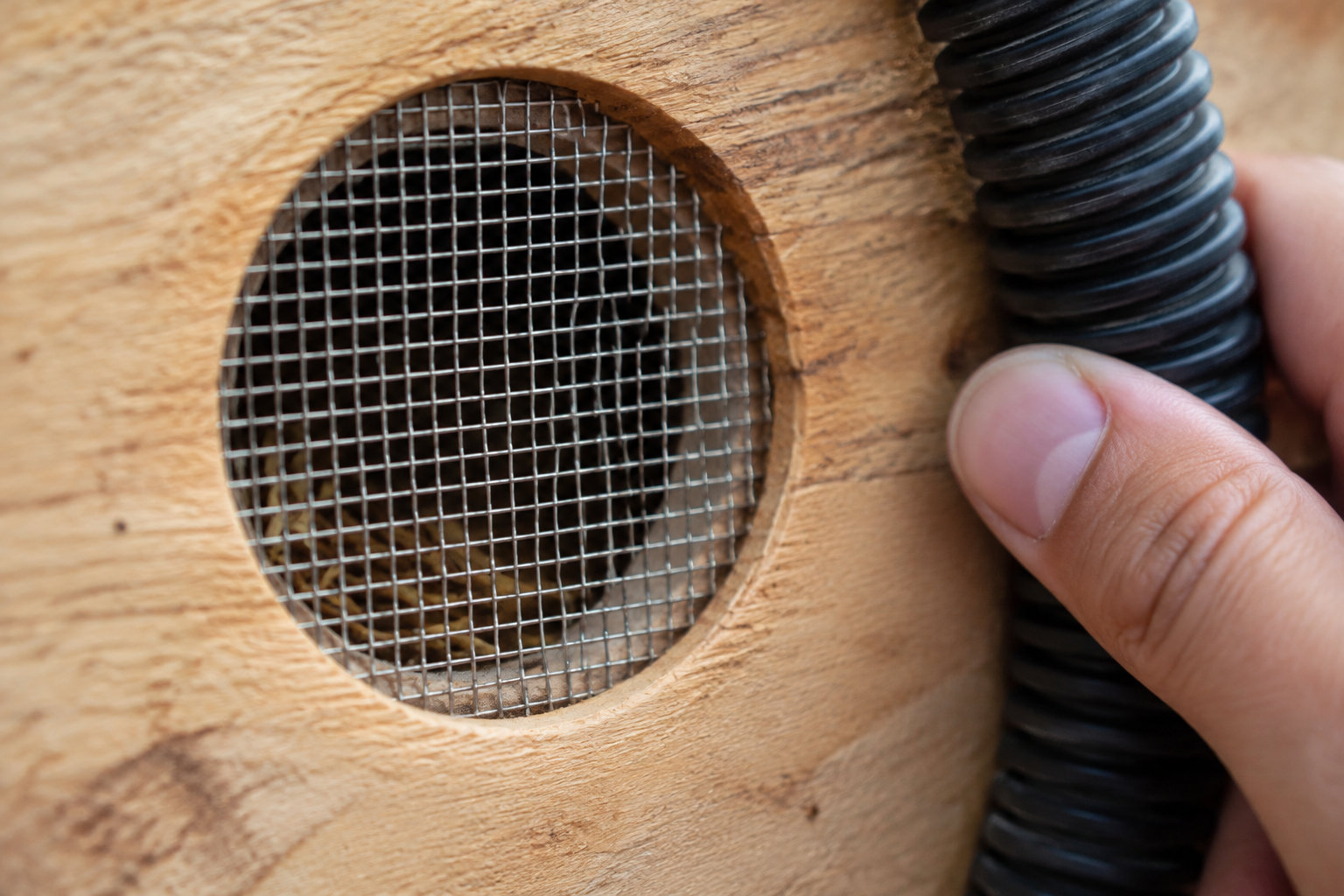
Remove food leftovers from the outworld within 24 to 48 hours to reduce mould and mites. For a setup that holds ants in, read the key differences between an ant farm and a formicarium.
Skip the fixed watering day. For the substrate ratios that keep each end of the nest right, see the natural substrate guide, then check these signs before you add water:
- If drops form on the glass, stop watering or water less.
- If mould appears in the chambers, reduce watering and improve airflow.
- Refill the water reservoir when it runs low. Some nests need this every one to three weeks, depending on the design and room humidity.
- With a Lasius niger nest, water once or twice a week, at one end only.
Founding a queen in a test tube before a full nest
A test tube is a suitable start for a newly mated queen. Put water at the closed end, cotton between the water and the queen, and cotton at the opening.
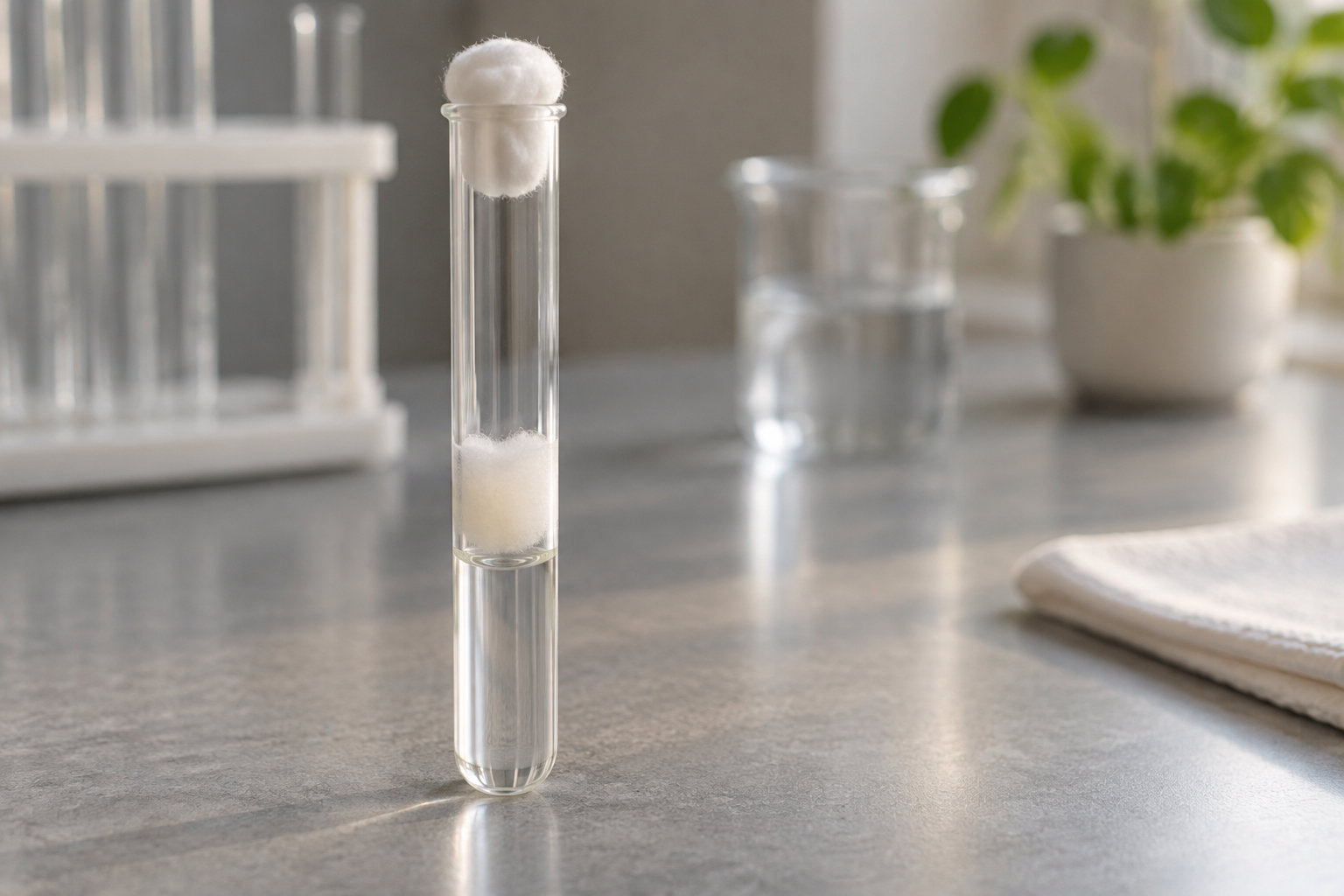
Keep the queen in a dark, quiet place and check on her as little as possible. For humidity and substrate details, see the formicarium setup guide.
Move the colony out of the tube based on worker count and tube condition, not on the calendar:
- For Lasius niger, move the colony once it has about 30 to 50 workers and the tube is crowded.
- If mould appears in the tube, remove the food waste and adjust the watering before anything else.
- For Messor barbarus, move the queen to a nest with a damp brood area and dry seed chambers as the colony grows.
Buying a concrete nest from The Formicarium and what it costs
The Concrete Ant Nest with Water Tower pairs a clear acrylic outer shell with a cast concrete interior, so you can watch the colony. It arrives assembled and includes a removable shading plate, a cover that blocks light.
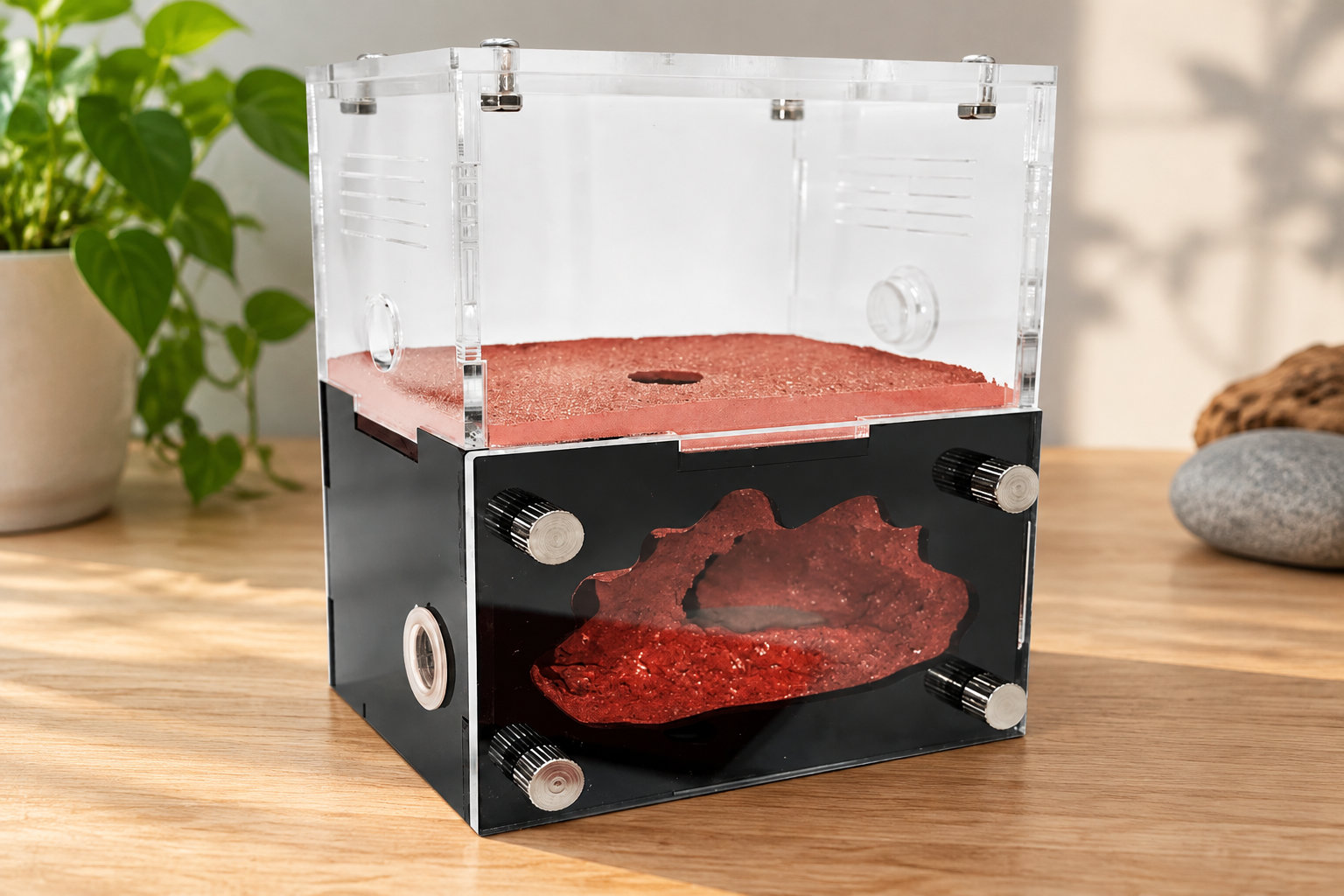
The 20 mL water tower keeps the nest humid for up to 25 days on each fill. The two sizes cover founding queens and small colonies. The smaller one suits a queen without workers.

For a colony that will grow, start with the expandable concrete formicarium with three expansion ports, and compare it with the water tower nest below.
| Criterion | Concrete Ant Nest with Water Tower | Concrete Expandable Ant Farm Formicarium |
|---|---|---|
| Price | 72.95 USD | 42.95 USD |
| Hydration | 20 mL water tower, humid for up to 25 days per fill | Passive humidity control |
| Expansion | Two sizes, for founding queens and small colonies | Modular, 3x 12 mm expansion ports |
| Shipping | 7–21 business days, free over US$30 | 7–21 business days, free over US$30 |
Pick the material by what you need most. Want a clear view of the tunnels? Choose acrylic and add your own water source. Want fewer refills? Choose concrete.
Your next step is to pick the nest that fits that need, set up a damp end and a dry end, and water only when the nest needs it.
Frequently Asked Questions
Do concrete nests need to be cured before ants move in?
No. The Concrete Ant Nest with Water Tower from The Formicarium arrives fully assembled and ready to use, so you don’t need to cure it first. Fill the water tower before you place the ants inside.
Can ants escape from an acrylic ant farm?
Yes. Ants get out through gaps or through vents that are left uncovered, so an acrylic farm is only as escape-proof as its seals. Check that the lid fits tight, and make sure no vent or tube connection is open.
Does The Formicarium ship outside the United States?
Yes, The Formicarium ships worldwide, so you can order from outside the United States. Customs duties and import taxes may apply when your parcel arrives, so check your country’s rules before you buy.