Ma boutique
Concrete Expandable Ant Farm Formicarium with Hunting Area
Concrete Expandable Ant Farm Formicarium with Hunting Area
Couldn't load pickup availability
Technical Details
Concrete Expandable Ant Farm Formicarium Overview
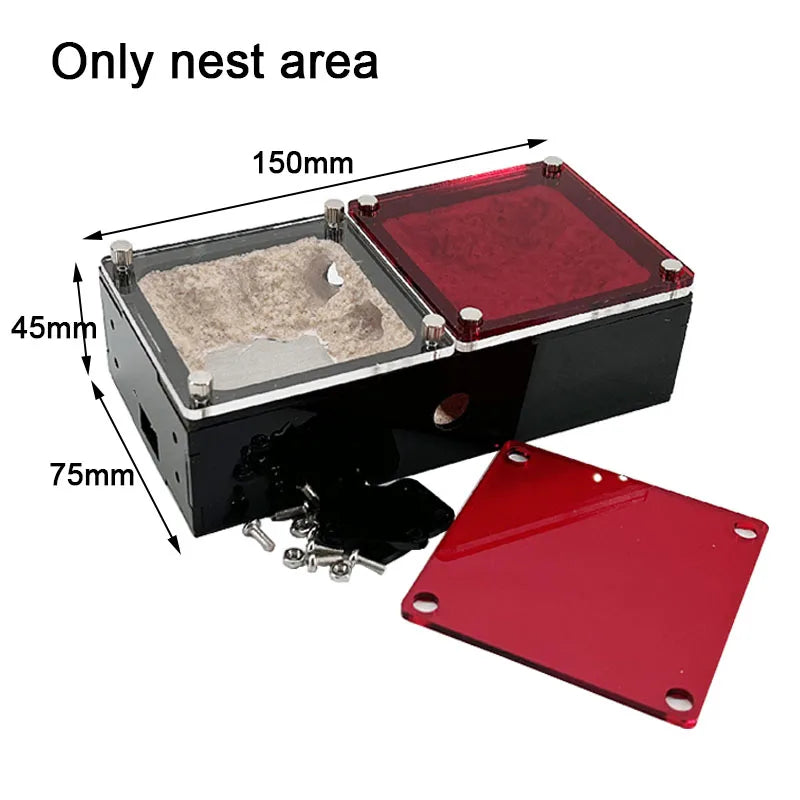
This concrete formicarium combines a living nest chamber with a dedicated hunting area, giving your colony a complete habitat right out of the box. The nest is cast in concrete, a material ants naturally accept because it regulates humidity passively and mimics underground conditions. The setup is expandable, so you can connect additional modules as your colony grows. Designed for small to medium ant species. Check our ant keeping humidity and temperature guide before setting up, and browse our full ant nests collection to compare formats.
The Real Upgrade
A Concrete Ant Farm That Grows With Your Colony
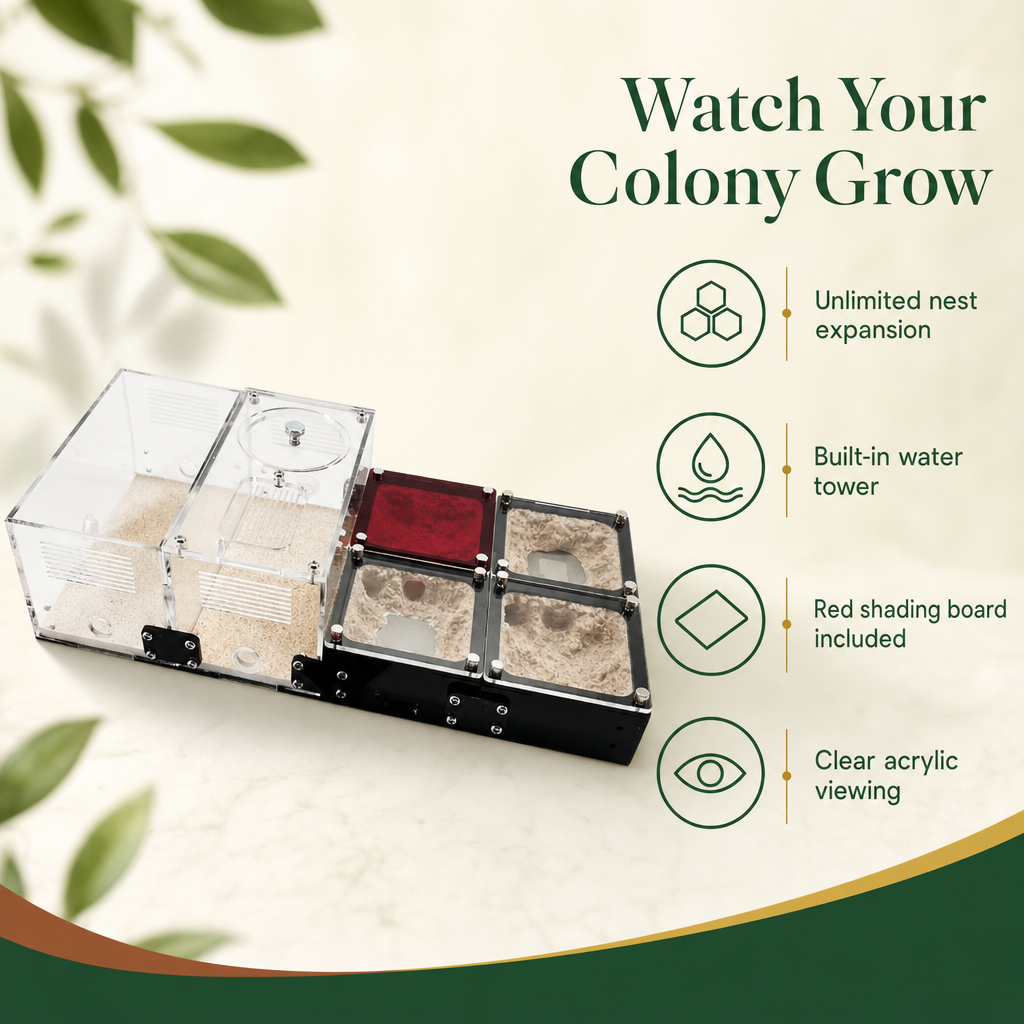
Most starter setups force you to choose between watching your ants and actually giving them space to live. This expandable concrete formicarium does both. The hunting area keeps foraging behavior visible and natural, while the concrete nest gives your queen and workers a stable, humidity-friendly home. When the colony grows, you expand. No starting over, no stressing your ants with a forced move.
Materials & Build
Concrete Nest, Hunting Area, Built to Last
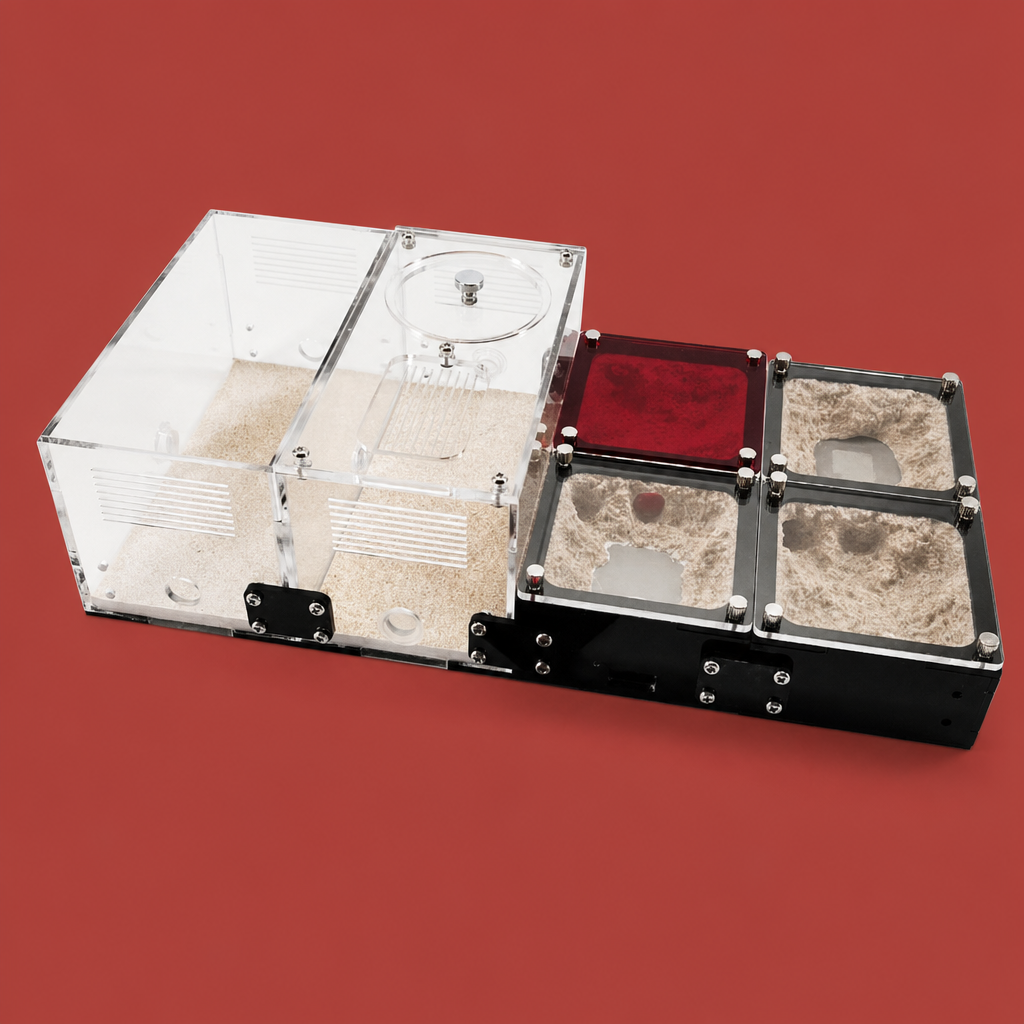
Concrete is one of the best materials for ant formicariums. It absorbs and releases moisture gradually, which means humidity stays stable inside the nest chambers without constant intervention. It is also dense and solid, so the structure holds up over years of use. The hunting area is integrated into the design, giving workers a clear zone to forage, cache food, and dump waste, keeping the nest itself cleaner.
Picture This
Watch Your Lasius Niger Work the Hunting Zone
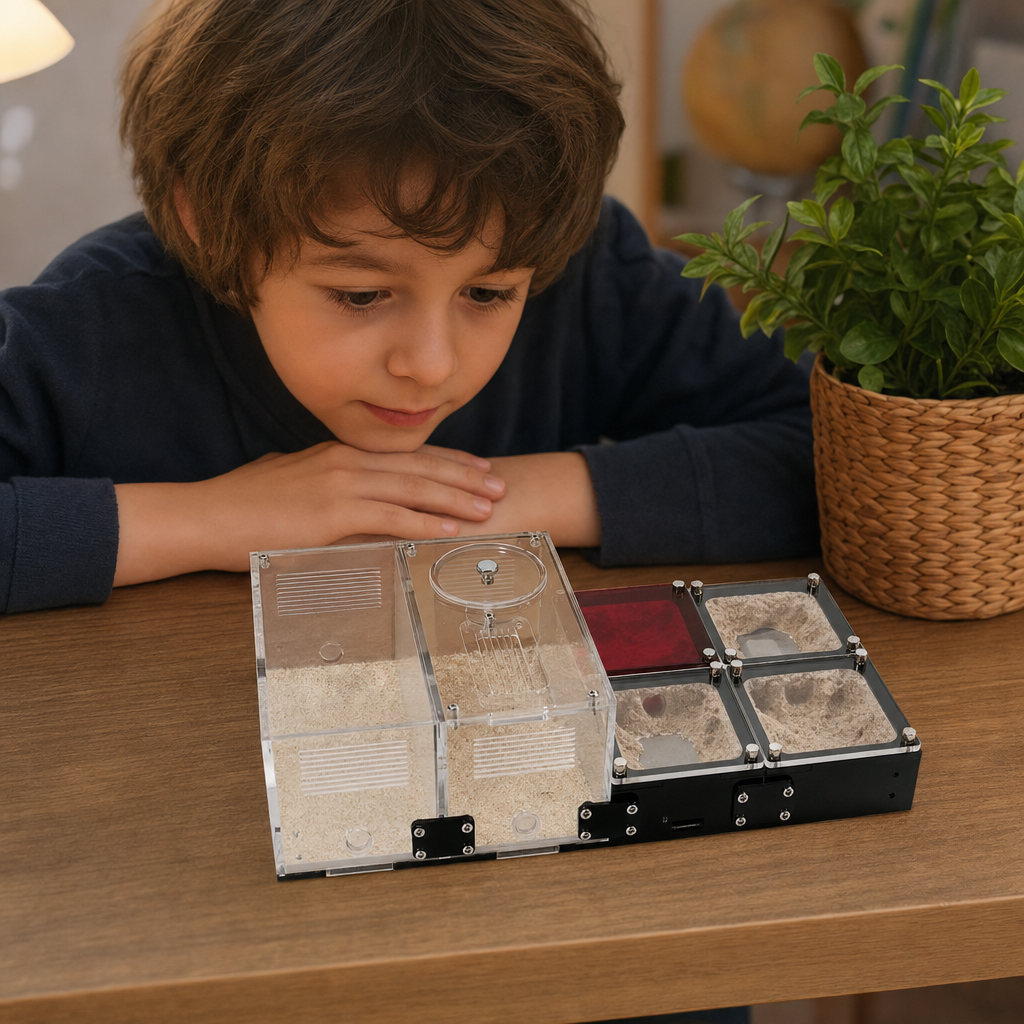
You drop a few seeds or a small insect into the hunting area. Within minutes, workers of Lasius niger, the common black garden ant, stream out of the nest tunnels, assess the food, and begin organizing transport. You see the whole process clearly because the hunting area is separate and open. The concrete nest stays dark and humid in the background, exactly how your colony wants it.

Day-to-Day Use
Expandable Formicarium That Adapts as You Do
Feeding is straightforward because the hunting area acts as a buffer. You place food there, not directly in the nest, so cleaning is easier and the queen is never disturbed. As your Messor barbarus colony, the seed-harvesting ant, fills the first module, you connect the next one. No emergency rehoming, no colony stress. The modular design means this formicarium stays relevant for years, not just the founding stage.
FAQ
Your Questions Answered
What ant species work best in this concrete formicarium?
This setup is designed for small to medium ant species. Common choices include Lasius niger (black garden ant), Messor barbatus (seed-harvesting ant), or smaller Camponotus species. If you are unsure which species suits you, our article on the best ant species for beginners is a good starting point.
Why is concrete better than acrylic or plastic for an ant nest?
Concrete regulates humidity passively. It absorbs moisture when you water it and releases it slowly, creating stable conditions inside the chambers. Ants naturally excavate in soil and clay underground, so they accept concrete readily. It also does not degrade or warp over time the way some plastics can.
What is the hunting area for, exactly?
The hunting area is a separate foraging zone connected to the nest. You place food there, and workers retrieve it. This keeps the nest cleaner, makes feeding easier to observe, and gives workers a natural outlet for foraging behavior. It is included in the setup, not a separate purchase.
Can I expand this formicarium later?
Yes. The design is explicitly expandable and modular. As your colony grows beyond the initial nest chamber, you can connect additional modules. This means you do not need to replace the entire setup when your colony reaches a larger size.
Is this suitable for a beginner who just caught their first queen?
Yes, though a founding queen typically needs a small, dark, enclosed space first. Once the first workers hatch and the colony begins foraging, this concrete formicarium with its hunting area becomes an excellent permanent home. The passive humidity regulation also makes maintenance simpler for newer keepers.