Ma boutique
DIY Large Acrylic Ant Farm with Water Tower - Ant Keeping Gear
DIY Large Acrylic Ant Farm with Water Tower - Ant Keeping Gear
Couldn't load pickup availability
Technical Details
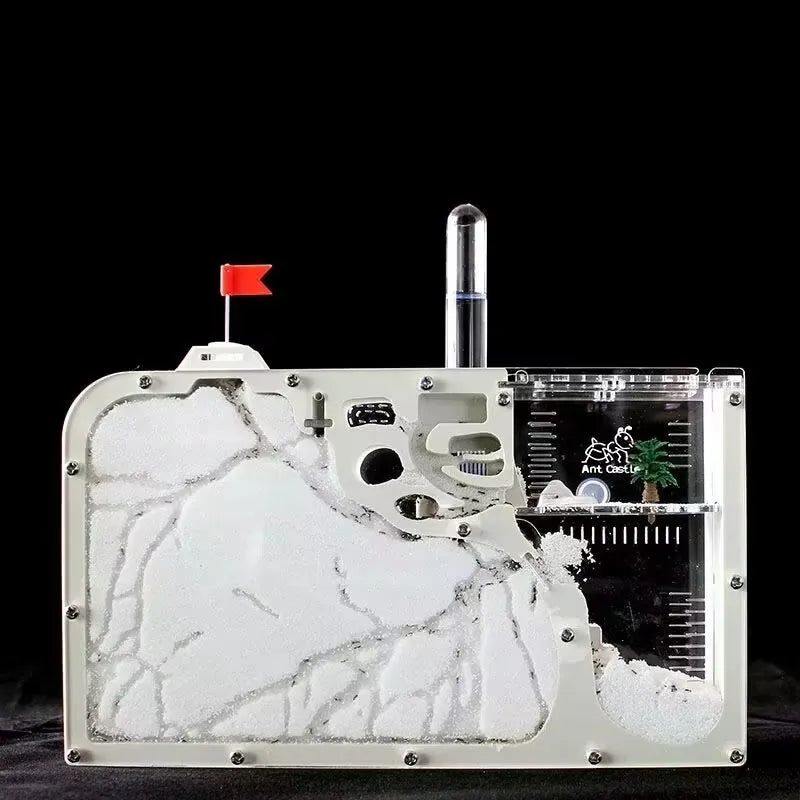
Large DIY Acrylic Ant Farm with Water Tower
This large DIY acrylic ant farm is designed for hobbyists who want to build and customize their own formicarium. The clear acrylic panels give you an unobstructed view of your colony at work, while the integrated water tower provides passive humidity regulation directly inside the nest. It arrives as a kit you assemble yourself, making it a hands-on project before your ants even move in. Compatible with a wide range of small to medium ant species, it suits both beginner setups and growing colonies. Check our ant keeping humidity and temperature guide to dial in the ideal conditions once your farm is built, and browse our full ant farm kits collection to compare options.
Why It Matters
Build It, Watch It, Love It
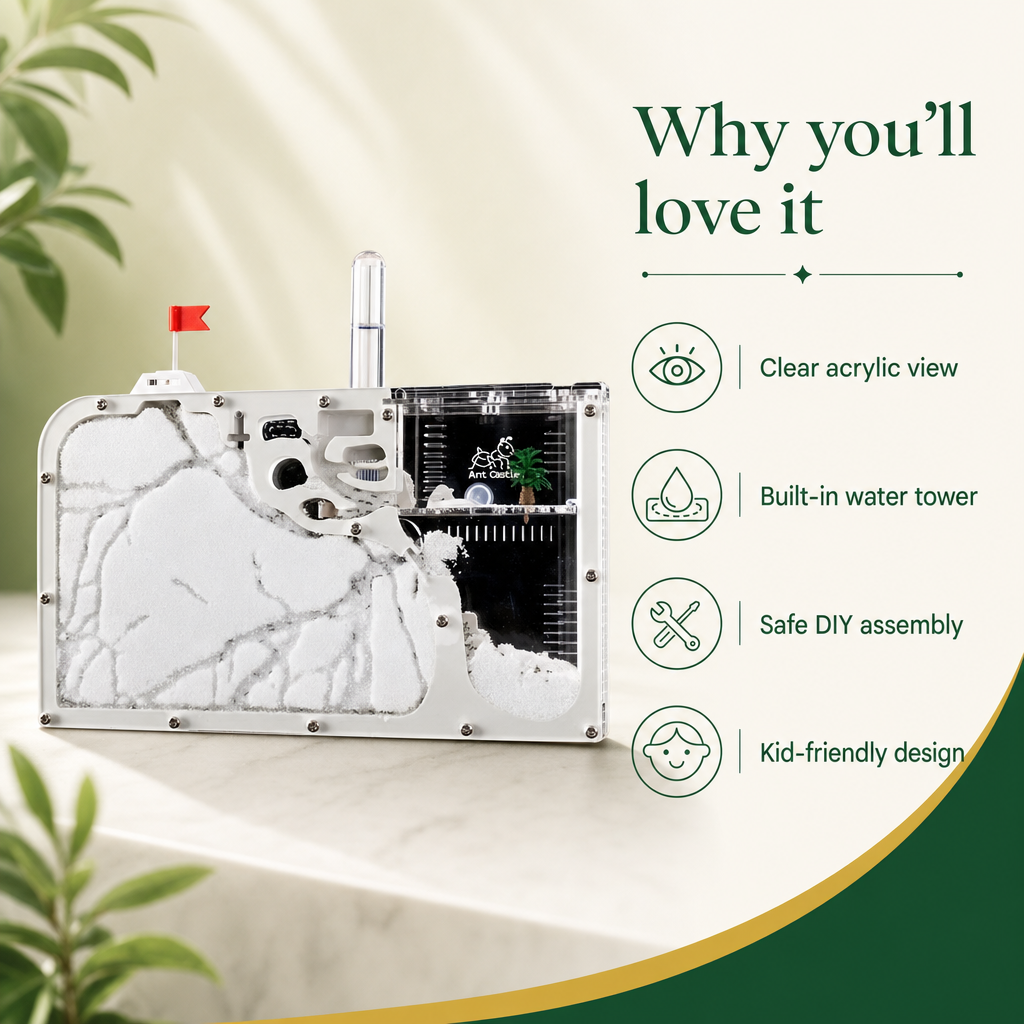
There is something genuinely satisfying about assembling your own acrylic ant farm and then watching your colony move in and claim every chamber. This DIY large formicarium turns the setup process into part of the hobby, not a chore. You understand exactly how the nest works because you built it yourself, and that knowledge makes you a better keeper from day one.
Product Details
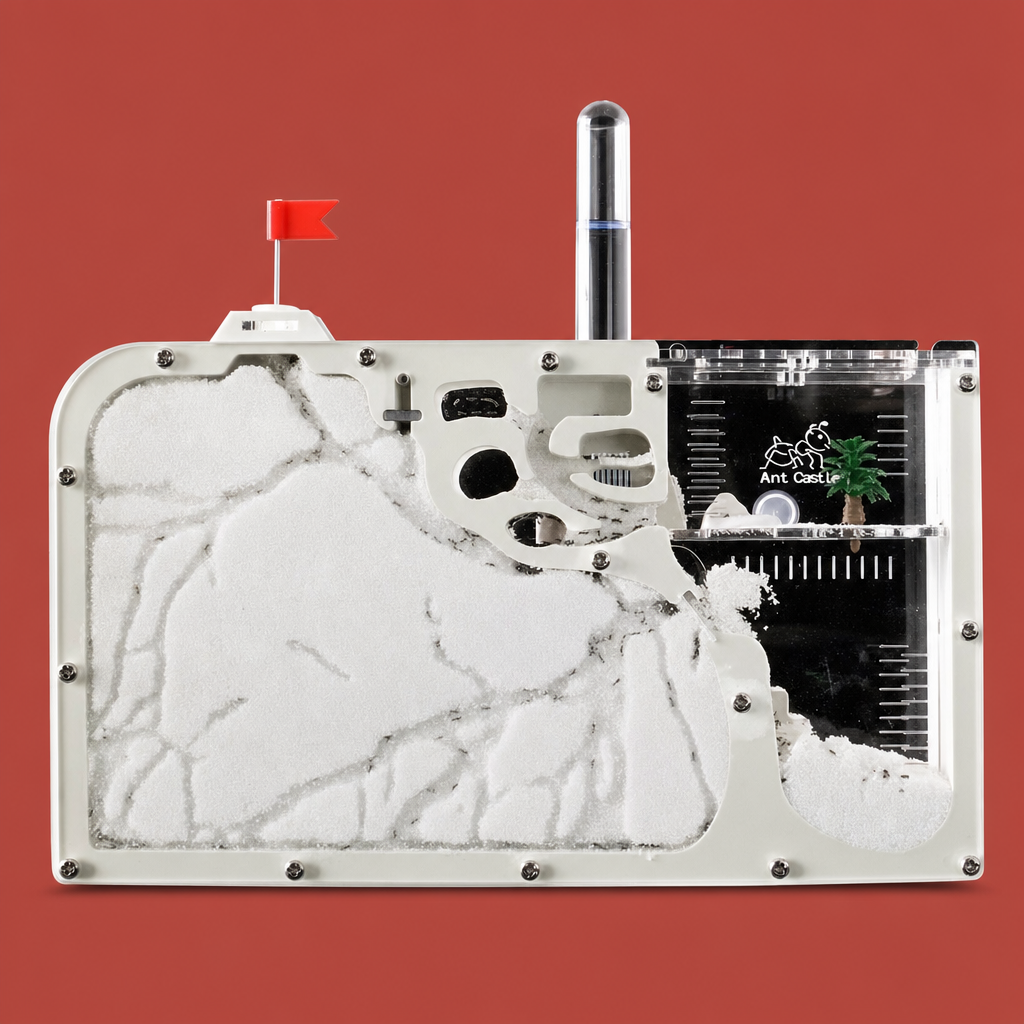
Crystal-Clear Acrylic, Built-In Water Tower
The farm is made from clear acrylic, which means zero visual obstruction between you and your colony. Every tunnel, every brood pile, every worker is visible without lifting a lid. The water tower is not an afterthought bolted on the side: it is integrated into the design, feeding moisture passively into the nest so you maintain stable humidity without daily intervention. A genuinely practical feature for any keeper.
In Action
Your Colony Moves In, You Watch
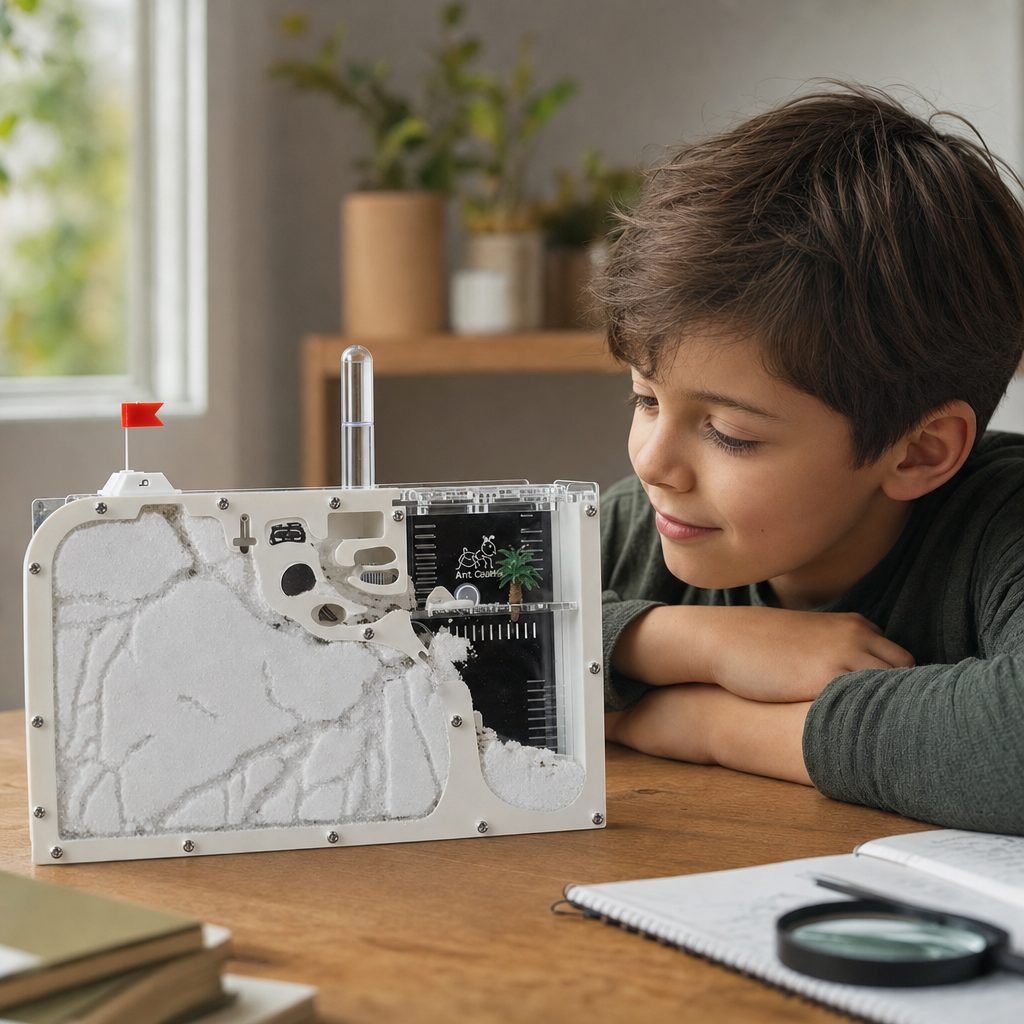
Picture this: you finish the assembly, connect the water tower, and introduce your queen along with her first workers. Within hours they are already exploring the chambers, moving brood toward the warmest corner, and establishing their first waste area. Because the acrylic is fully transparent, you catch every moment of that founding behavior up close, the kind of detail that makes ant keeping genuinely addictive.
Keeper's Take
Passive Humidity, Less Daily Fussing
The water tower earns its place fast. Instead of misting the nest every day and risking flooding a chamber, you top up the tower and let the acrylic farm regulate itself. For species like Lasius niger (the common black garden ant) or Camponotus (the large carpenter ants) that need consistent moisture without waterlogged tunnels, that passive system removes one of the most common beginner mistakes before it happens.
FAQ
Your Questions Answered
Do I need any tools or glue to assemble this DIY acrylic ant farm?
The farm is a DIY kit designed for self-assembly. The exact fastening method depends on the included components, so check the parts when your order arrives. No specialist tools are typically required for acrylic panel kits of this type, but review the included instructions before starting.
How does the water tower keep the nest humid?
The integrated water tower feeds moisture passively into the acrylic nest structure. You fill the tower and it gradually diffuses humidity through the nest without you needing to mist daily. It is a hands-off system that helps maintain stable conditions, which is especially useful during the founding stage.
What ant species work well in this large acrylic formicarium?
This farm is compatible with small to medium ant species. Common choices include Lasius niger (the black garden ant), smaller Camponotus species (carpenter ants), or Messor barbarus (the seed-harvesting ant). Avoid very large species or those that need specialist substrate nests, as acrylic farms suit tunnel-dwelling colonies best.
Is this suitable for a beginner who just caught their first queen?
Yes, with one note: a large farm is best introduced once your colony has grown beyond the founding stage and has at least a small worker force. A newly caught queen is happiest in a small test tube setup first. Once workers are present and active, transferring to this acrylic farm makes sense.
How do I clean the acrylic panels without scratching them?
Use a soft, damp cloth and avoid abrasive sponges or harsh chemical cleaners, which can scratch or cloud clear acrylic. For the interior, the best approach is to let your colony handle waste management naturally and only intervene if a blockage occurs, using soft tools and minimal water.