


Ma boutique
Concrete Ant Nest with Water Tower - Founding to Small Colony
Concrete Ant Nest with Water Tower - Founding to Small Colony
Couldn't load pickup availability
Technical details
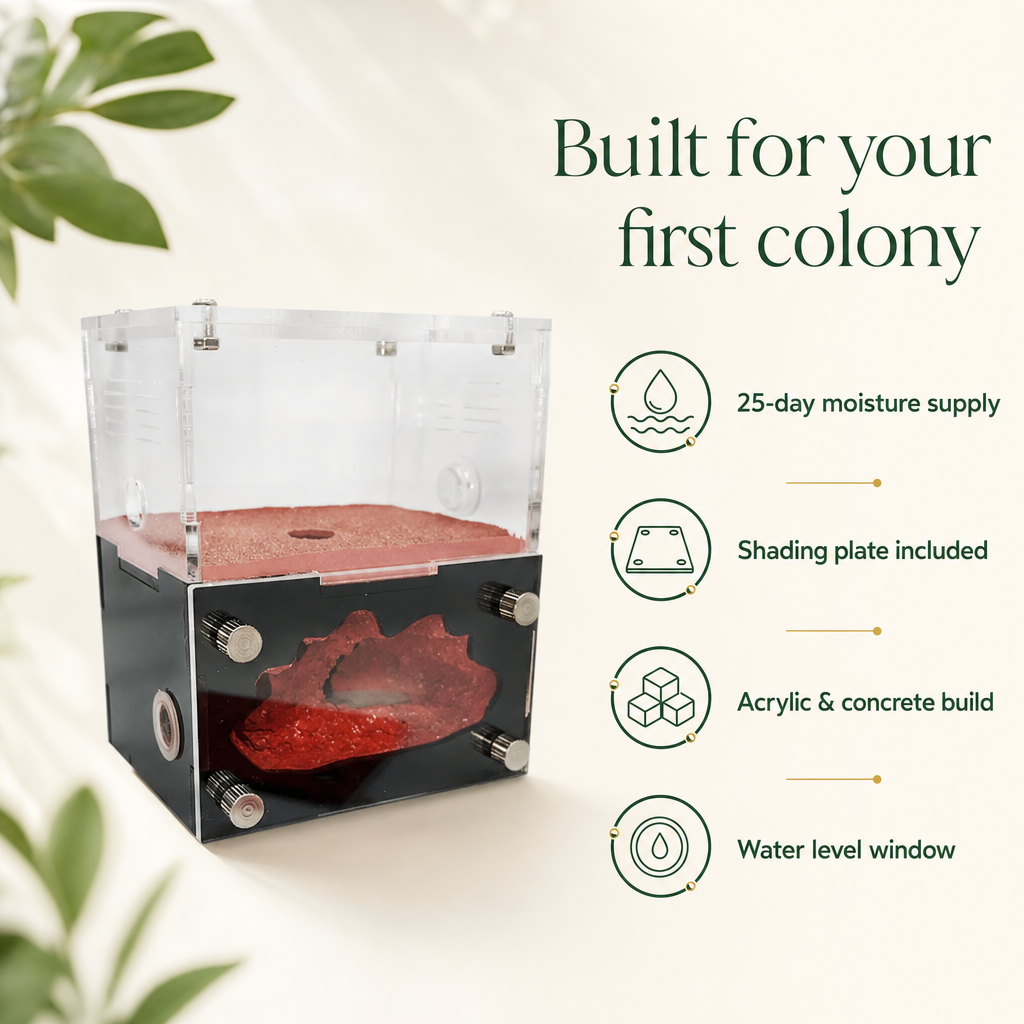
Concrete ant nest with water tower
This concrete ant nest pairs a clear acrylic outer shell with a cast concrete interior, giving you full visibility while the porous material wicks moisture evenly across the chamber walls. A 20 mL water tower keeps humidity stable for up to 25 days without daily refilling. A removable shading plate provides the darkness founding colonies need to feel secure. Ships fully assembled and ready to use. Available in two sizes to match your colony stage. For a deeper look at moisture management, see our ant keeping humidity and temperature guide, and if you are still deciding on the right enclosure size, the ant formicarium size guide walks you through every stage.
The benefit
Three weeks of humidity, zero daily fussing
You caught your first queen, she sealed herself in a test tube, and now the waiting game begins. The last thing you need is a nest that dries out before she even hatches her first workers. Fill the 20 mL water tower once, and this concrete ant nest holds stable humidity for up to 25 days on its own. You get to watch your colony grow instead of chasing a syringe every morning.
Product details
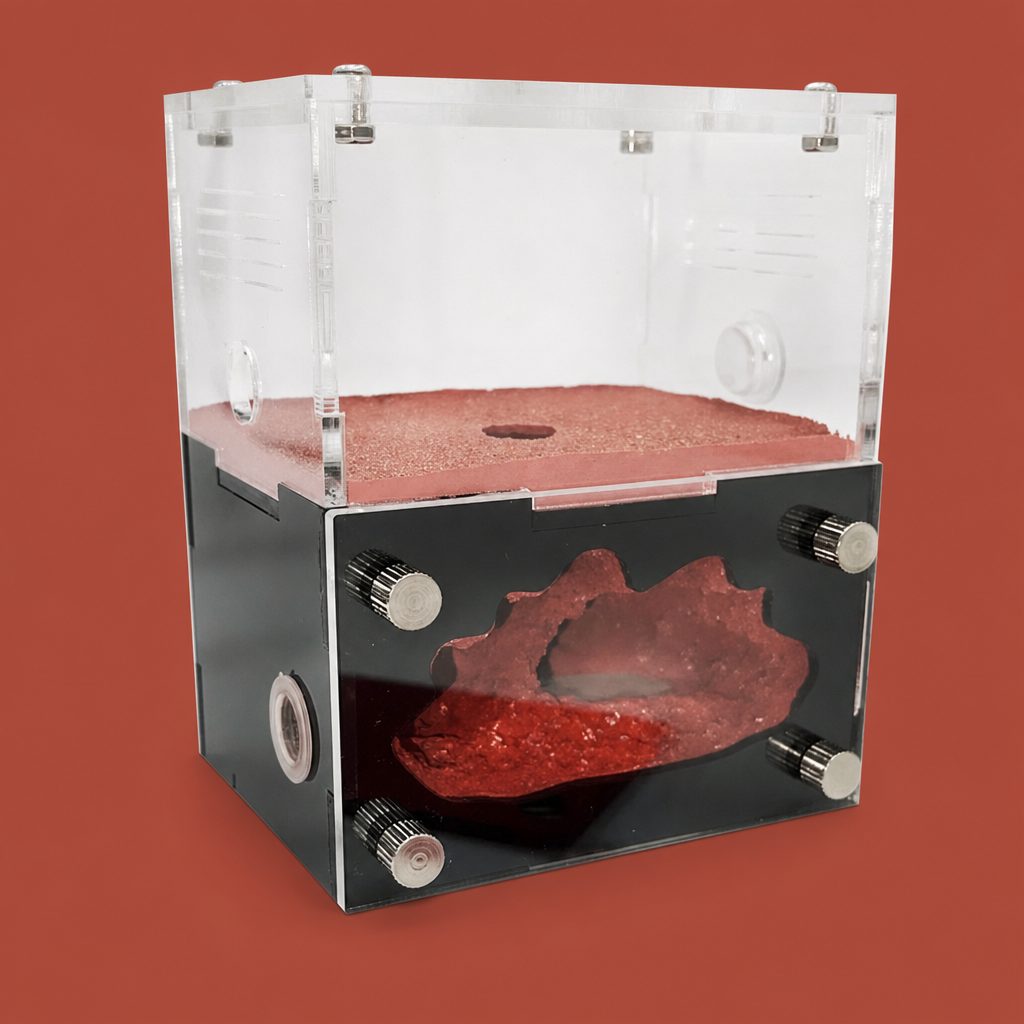
Concrete core, clear acrylic, built to last
The cast concrete interior is the real engine here: porous material wicks moisture evenly across every chamber wall, the way a natural underground gallery would. The clear acrylic outer shell means you never miss a moment of colony activity. The removable shading plate is not an afterthought either: founding queens, whether you are starting with Lasius niger (the common black garden ant) or a small Formica colony, need darkness to feel secure enough to lay eggs.
In action
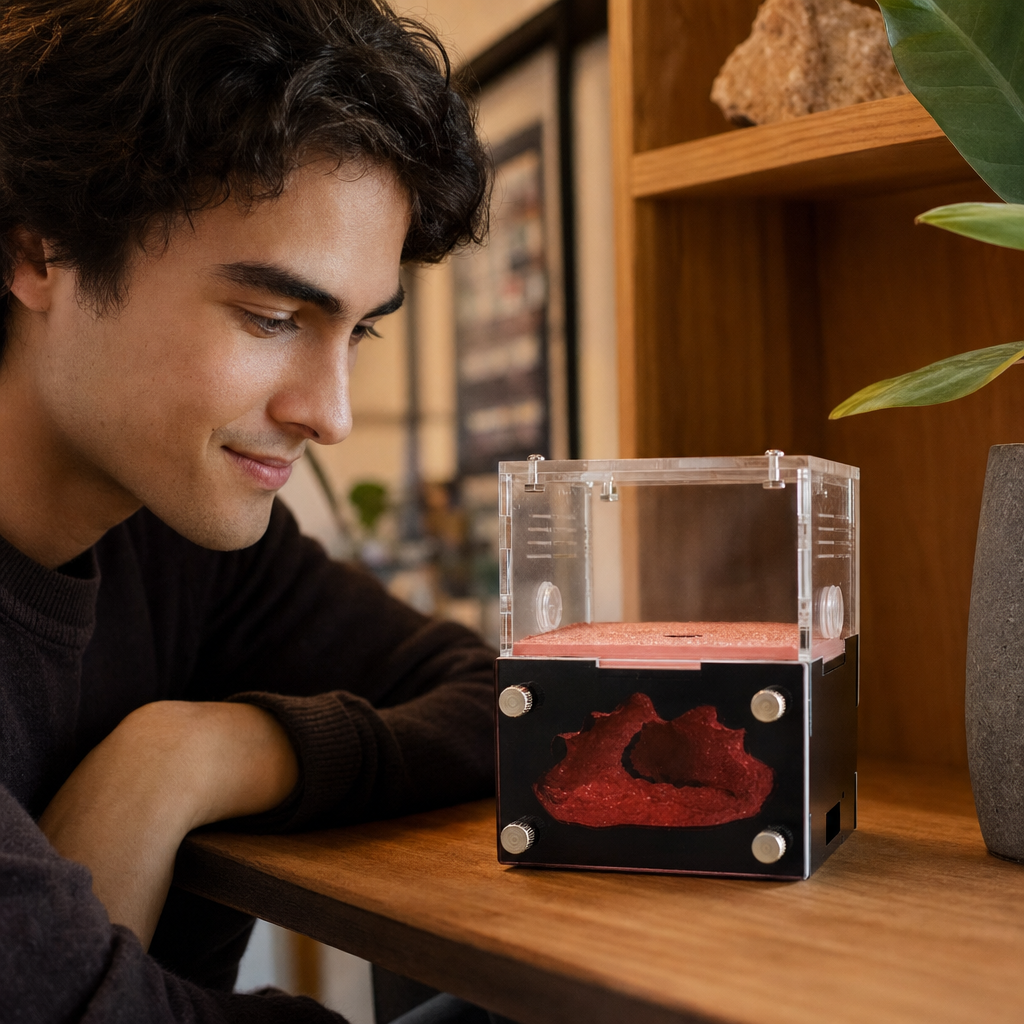
Fill once, slide the plate, watch them build
Set the nest on your desk, fill the water tower, and slide the shading plate closed. Your queen moves in, the concrete walls stay evenly moist without pooling, and the colony starts to feel at home. When you want to observe, pull the plate back for a few minutes, then close it again. Two sizes mean you can pick the one that fits your founding group right now, not a colony three times its current size.

Field test
What changes when the gear actually works
A plastic starter kit that dried out in three days, a queen that stressed and ate her eggs, frantic late-night watering: those are real beginner mistakes, and the problem was never the ants. Concrete changes the equation because it regulates itself. You stop micromanaging moisture and start actually keeping ants. For anyone setting up their first enclosure, the ant formicarium setup guide covers everything you need before your first workers emerge.
FAQ
Questions about this concrete ant nest
How long does one fill of the water tower last?
The 20 mL water tower keeps the concrete nest at stable humidity for up to 25 days without refilling. That means roughly three weeks of passive moisture regulation, so you are not checking the nest every day during the critical founding stage.
Does it arrive assembled or do I need to put it together?
It ships fully assembled and ready to use. You fill the water tower, place your founding queen or small colony inside, slide the shading plate closed, and you are done. No tools, no setup time required.
Which ant species work well in this nest?
It suits founding queens and small colonies of most common beginner species. The description specifically mentions Lasius niger (the common black garden ant, one of the best beginner species in North America) and small Formica colonies. The shading plate and stable humidity make it a good fit for any queen in the early founding stage.
Why concrete instead of plastic or plaster?
Concrete is porous, so it wicks moisture evenly across the chamber walls the way a natural underground gallery would. This prevents dry spots and pooling at the same time. Plastic dries out fast and cannot self-regulate; concrete does the work passively once the water tower is filled.
Which size should I choose for a founding queen with no workers yet?
The product comes in two sizes so you can match the nest to your colony stage. A founding queen with no workers yet does best in the smaller size: a chamber that is too large can stress a new queen. Check the ant formicarium size guide if you are unsure which stage your colony is at.


