Ma boutique
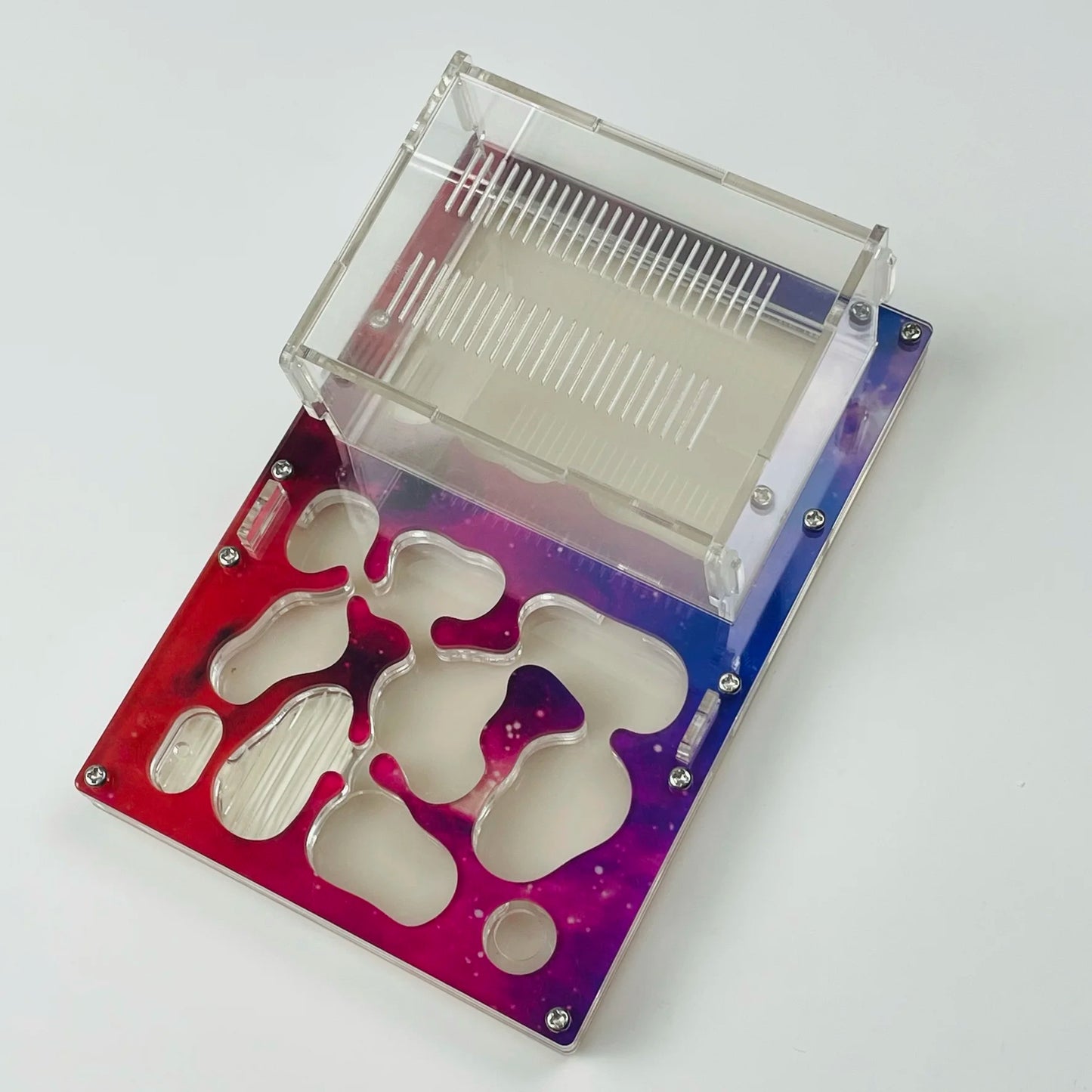
Modular Ant Farm Formicarium with Expansion Ports, Acrylic + Concrete
Modular Ant Farm Formicarium with Expansion Ports, Acrylic + Concrete
Couldn't load pickup availability
Technical Details
Modular Acrylic & Concrete Ant Farm Formicarium
This modular ant farm formicarium combines a clear acrylic viewing panel with a concrete nest core, giving your colony a naturalistic, humidity-retaining environment you can actually watch. Expansion ports let you connect additional nest modules or a foraging arena as your colony grows, so you never have to start over. Designed for small to medium ant species, it suits beginners setting up their first colony and experienced keepers who need a scalable, expandable setup. Check our ant keeping humidity and temperature guide before filling the water reservoir, and browse the full ant nests collection to plan your expansion.

The Big Change
A Formicarium That Grows With Your Colony
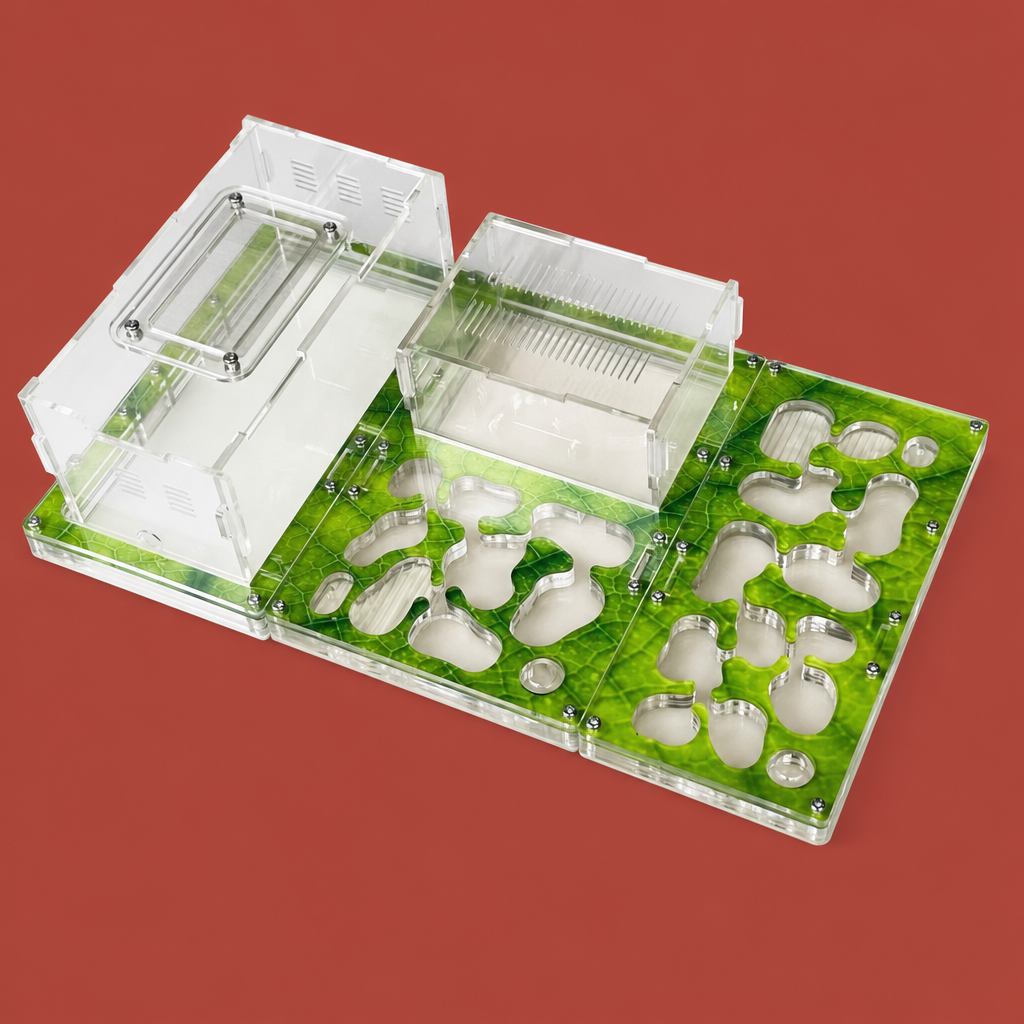
Most ant farms force you to choose: buy small and upgrade later, or overspend on space your founding queen will never use. This modular acrylic and concrete formicarium solves that. Start compact, then plug in a new module the day your colony outgrows its first chamber. You invest once, and the setup evolves with every new generation of workers.
Build & Materials
Concrete Core, Crystal-Clear Acrylic Front
The concrete nest core is not just aesthetic. Concrete holds moisture naturally, creating the stable humidity gradient that species like Lasius niger (the common black garden ant) and Camponotus (carpenter ants) need without constant manual misting. The clear acrylic panel gives you an unobstructed view of every tunnel and chamber. Expansion ports are pre-fitted, so connecting the next module takes seconds, no drilling, no guesswork.
In Real Use
Watch Your Queen Claim Her First Chamber
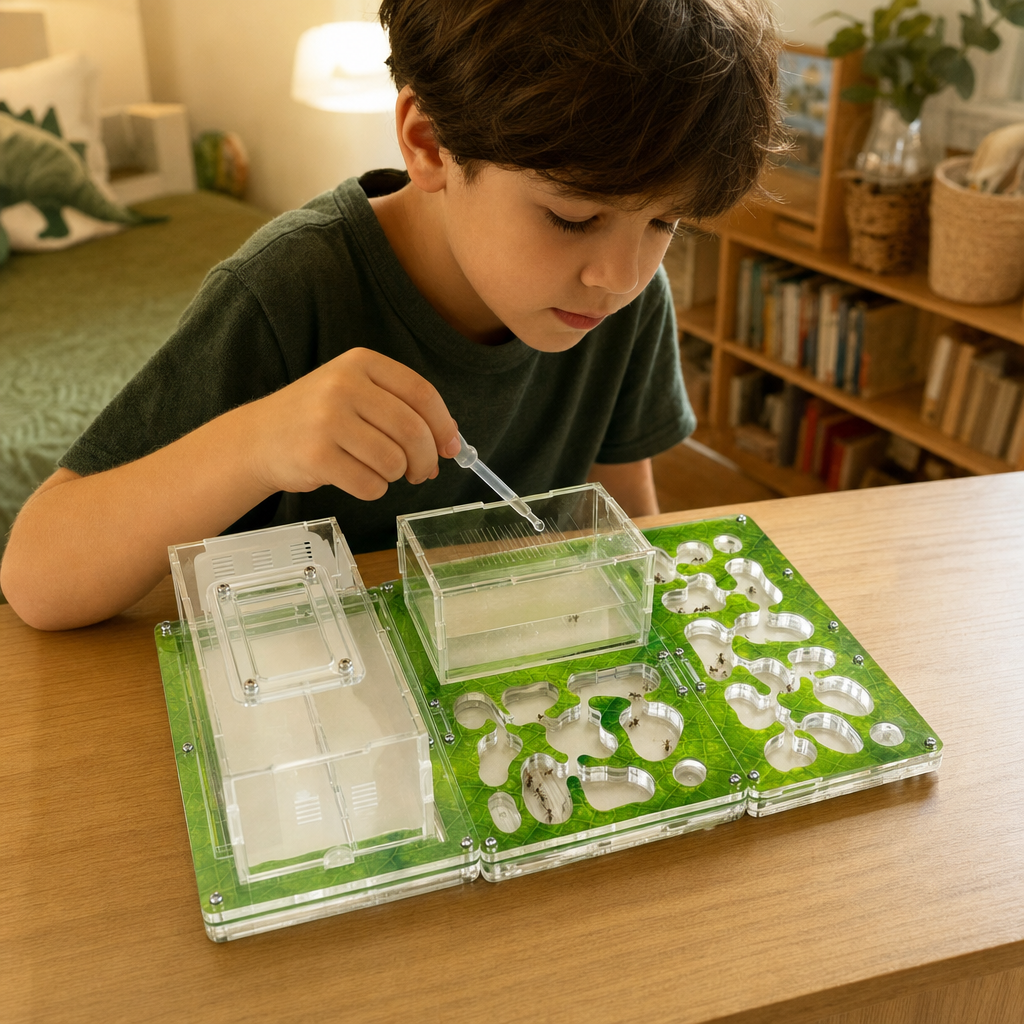
Picture this: your newly caught queen, fresh from nuptial flight season, sealed into the founding chamber. Through the acrylic panel you watch her lay her first eggs, tend her first larvae. Weeks later, when her first workers emerge and the nest feels crowded, you click on the expansion module. The colony flows in on its own. You did not disturb a single ant.

Keeper's Verdict
Modular Ports That Actually Make Sense Daily
Expansion ports are only useful if they are easy to seal when you are not using them and easy to open when you are ready. These are. Keepers running Messor barbarus (seed-harvesting ants) with growing worker counts report the concrete section stays at a workable humidity level far longer between waterings than plain acrylic nests. Less fussing with the setup means more time actually watching your colony do its thing.
FAQ
Your Questions Answered
What ant species work best in this formicarium?
It is designed for small to medium ant species. Popular choices include Lasius niger (common black garden ant) and Camponotus (carpenter ants). Messor barbatus, the seed-harvesting ant, also does well. Very large or very tiny micro-species may not be the best fit, so check chamber dimensions against your species before ordering.
How does the humidity system work in the concrete section?
The concrete core has an integrated water reservoir. You add water to it and the concrete absorbs and slowly releases moisture into the nest chambers. This creates a natural humidity gradient without soaking the entire nest, which is exactly what most ant species need during founding and growth stages.
Can I really expand this formicarium later, or do I need to buy a whole new setup?
The expansion ports are built in from the start. When your colony grows, you connect an additional nest module or a foraging arena directly to the existing unit. No tools, no drilling. You keep your current colony undisturbed and simply add space where it is needed.
Is this suitable for a beginner who just caught their first queen ant?
Yes. The founding chamber gives a newly mated queen the dark, humid, enclosed space she needs during the claustral founding phase. The clear acrylic lets you observe without opening the nest. If you are just starting out, our ant keeping for beginners guide walks you through the first weeks step by step.
How do I clean the acrylic panel without scratching it?
Use a soft, damp cloth or a microfibre cloth only. Avoid abrasive sponges, paper towels, or solvent-based cleaners, as these scratch or cloud acrylic surfaces. For the concrete section, a light wipe with a barely damp cloth is enough. Never submerge the full unit.