

Gel ant farm vs sand: why sand is better for ants
Ant farms are sold with either sand or gel inside, and that choice decides whether the ants can dig.
Which one suits your colony, and how damp should it stay? This guide compares the two and shows how to set up a sand nest and water it without over- or under-watering.
Gel ant farm or sand: sand suits most colonies, gel suits short observation
Sand suits most colonies, because ants dig tunnels and chambers in it. Gel suits only short observation, when you just want to watch ants for a while.
But the right choice still depends on the species. Messor and Lasius niger dig in soil or sand-loam mixes, while Camponotus often use wood or ready-made cavities.
What the Kit Covers
In the box
- Glass nest enclosure
- Sand
- Basic setup accessories
Not in the box
The ants. You supply them yourself, and the kit suits small to medium species. For the full setup, follow the substrate and humidity steps before you add them.
Why sand lets ants dig and build their own nest
Sand lets ants dig their own nest, carving tunnels and chambers you can watch through the glass.
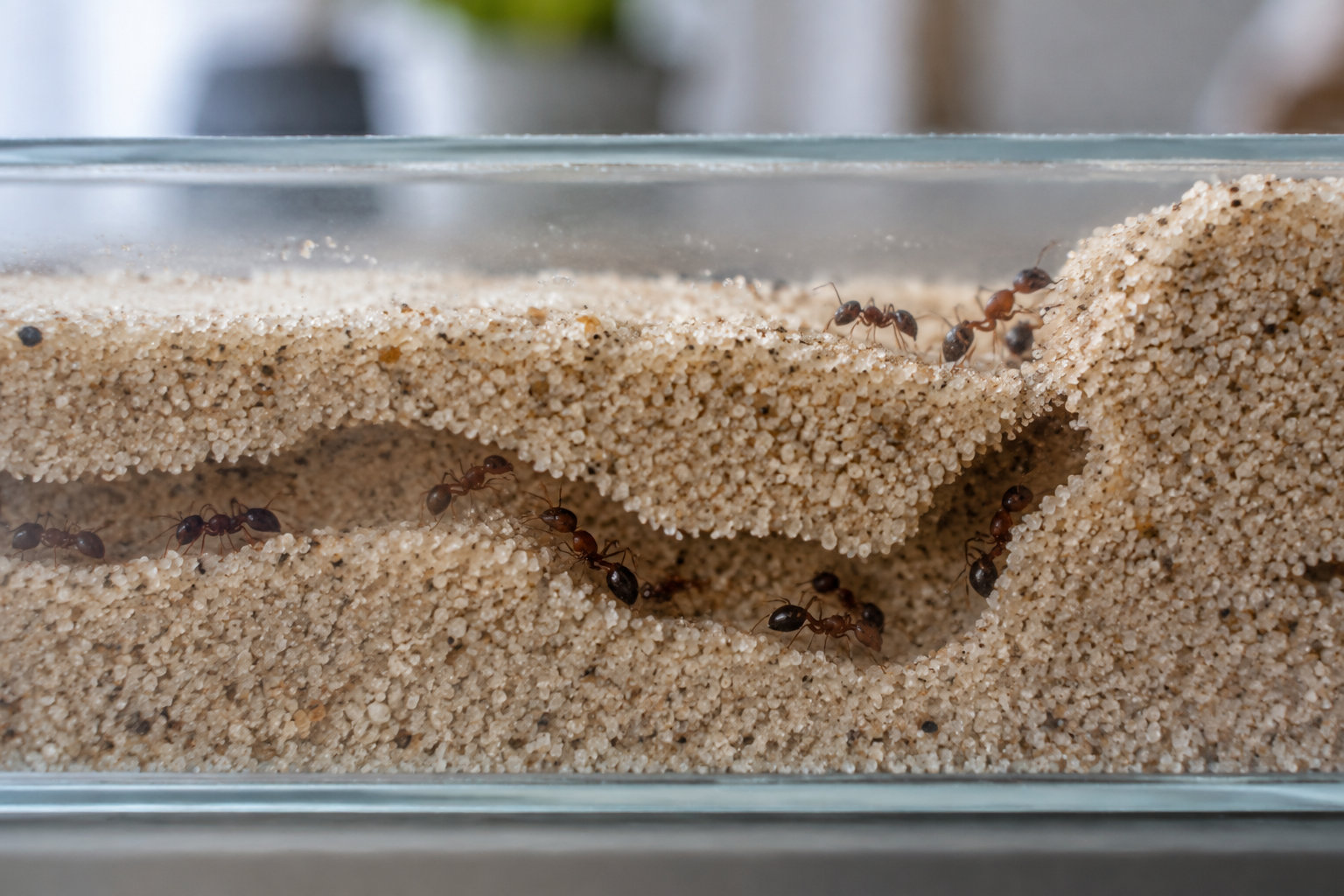
In a lab test, nests changed shape in 96% of trials with a cohesive mix of 25% clay powder and 75% sand, against 50% with granular sand. This does not mean every nest collapses or every ant needs clay.

Set the gap between the glass panes at about one to two times the length of your largest worker. A narrow gap keeps the tunnels close to the glass, so you can follow them from the side.
For a grain size that lets the walls hold, see the natural substrate guide.
How much water a sand nest needs and how to add it
Sand that is bone dry runs back into the tunnels as soon as the ants dig, and sand that is soaked turns to mud they cannot shape.
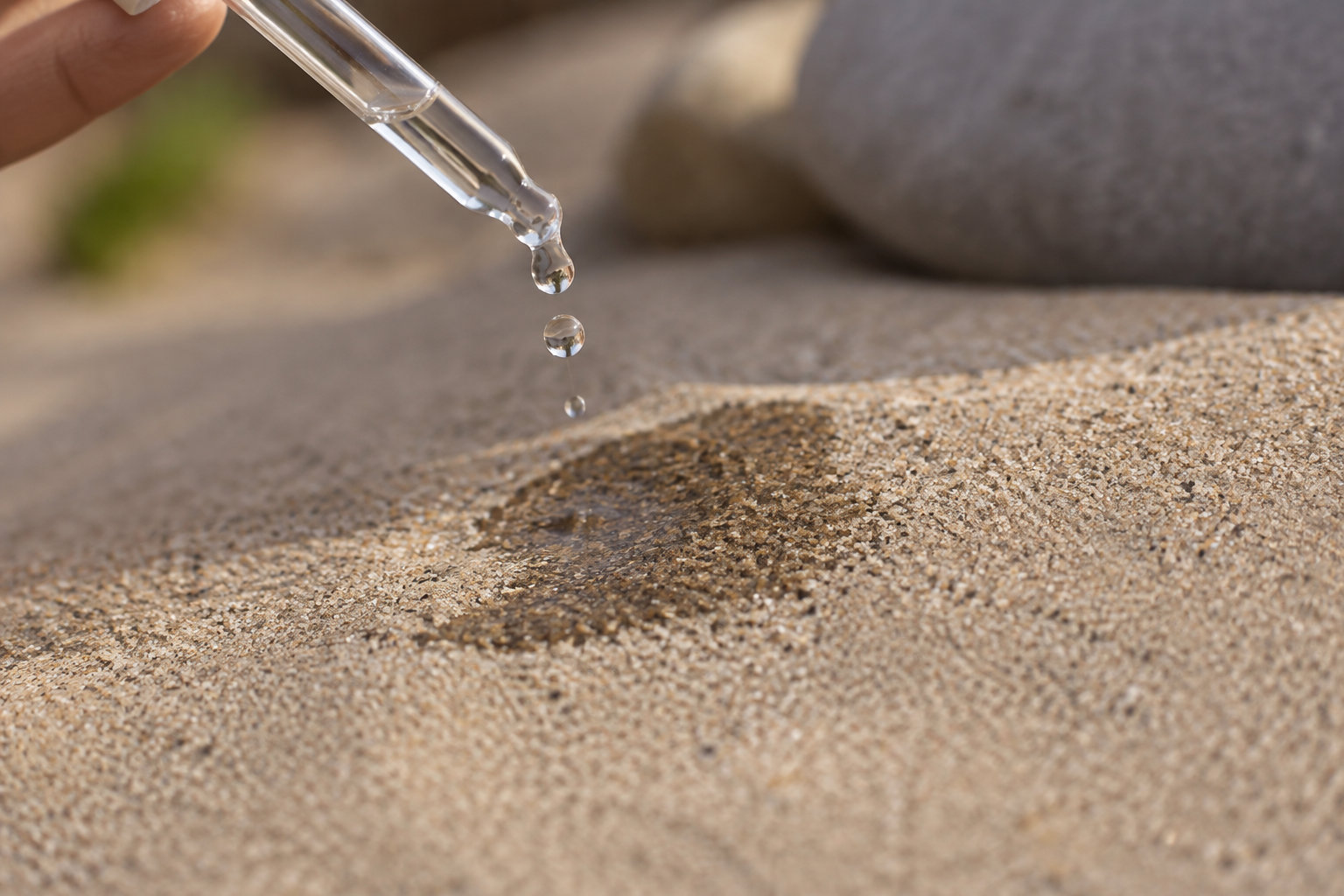
Both block digging, so the sand has to stay in a middle range of moisture.
Squeeze a pinch in your hand. It should clump and hold its shape, with no water on your fingers. If it crumbles, add a little water. If water runs out, the nest is too wet.
For steady moisture, see Dual Tower Ant Farm Water Feeder and follow these steps:
- Start with about 45 ml of water for 454 g of dry sand, roughly 10% of its mass.
- Mix it through until the sand is damp, not wet.
- Pour slowly at one edge so the rest stays drier.
- Add more with a pipette only when the sand visibly lightens.
- Never let water pool in the nest.
Gel as a short-term observation setup and its limits
Gel does well for short viewing. A gel habitat supplies nutrients and moisture, so do not add food or water. It lasts one to three months with ants.
Gel gives no nest for a reproducing colony, so a growing colony needs sand. Check the care instructions for your exact gel, since ingredients and effects differ between products.
Choosing the substrate for your species
Species that dig in open or sandy ground
Species that dig in open ground need sand. Messor arenarius stores seeds in dry chambers but keeps its eggs and larvae in a more humid area. Sand lets you build both zones in one nest.
Lasius niger, a beginner species, digs in sand-loam, so it suits the Ant Castle Sand Farm Kit from The Formicarium well. Dampen one zone for the brood and leave the seed chamber dry.
Desert-adapted ants still need moisture, so a Messor arenarius nest should have a gradient, from damp to dry, rather than one even level.
| Zone | Brood area | Seed-storage chambers |
|---|---|---|
| Moisture | Damp | Dry |
| Contents | Eggs and larvae | Seeds |
| Reason | Brood needs moisture to develop | Dry seeds stay free of mould |
Species that need wood or premade cavities
Camponotus ants usually fit wood or ready-made cavities better than sand, so check your species before you buy a nest.
Find out how your species nests before you order.
Compare the adult size with the Ant Castle Sand Farm Kit, which is made for small to medium ants.
If you keep Camponotus, plan for more space, because the colony will grow.
Setting up a safe sand nest with untreated substrate
Choose untreated quartz sand, not bird sand. Bird sand can contain disinfectants, and those can harm ants.
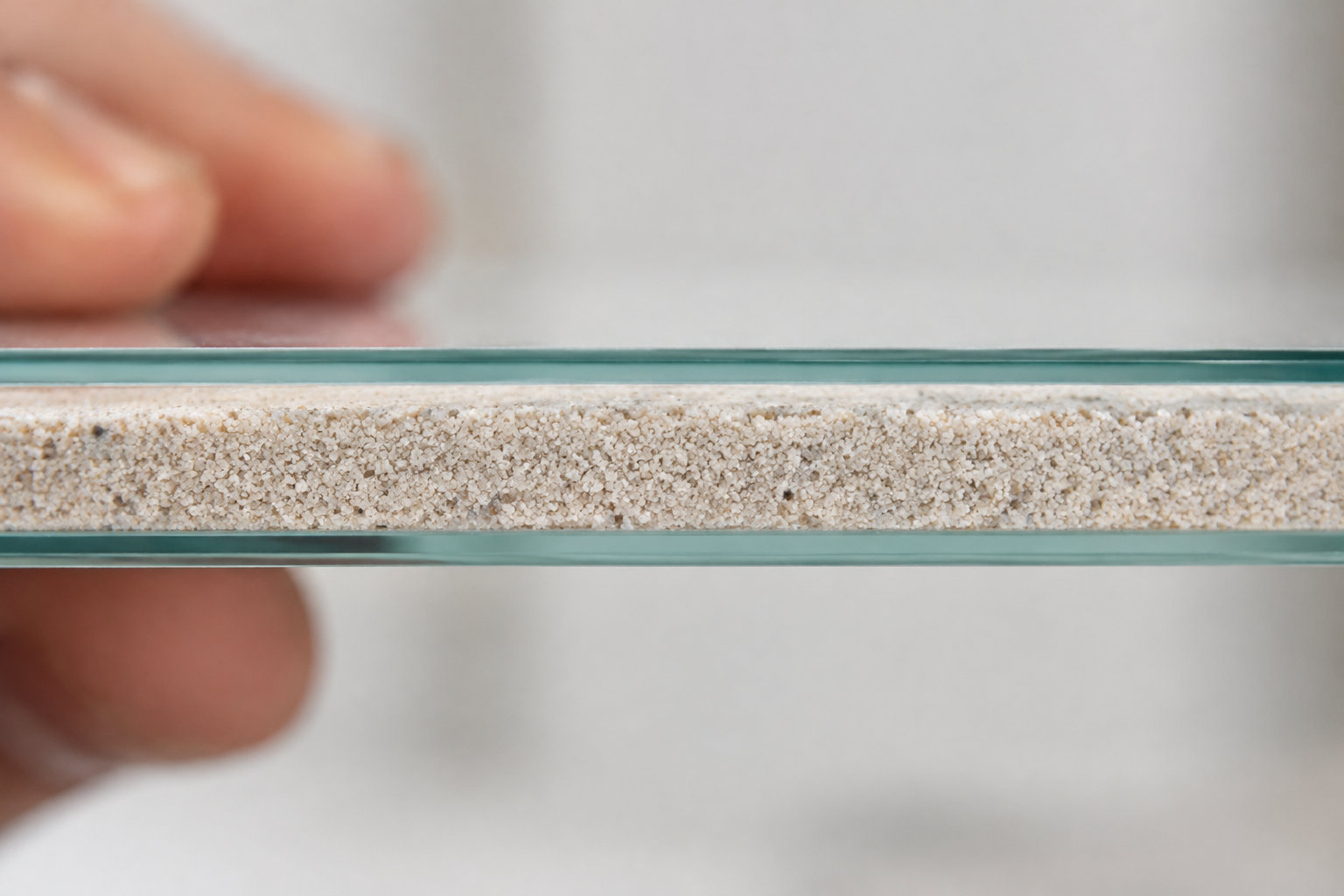
Before use, wash or bake the quartz sand, then follow the sand supplier’s instructions for safe preparation. Skipping this step leaves the colony exposed to residue.
Once the sand is ready, follow these steps in order, and for the two-pane layout, see the sand ant farm glass castle:
- Dampen the sand first: add water to about 10% of its dry mass, then mix until evenly damp.
- Fill both panes with that sand to one consistent depth.
- Add the colony last, once the surface is level and no water pools at the bottom.
Routine feeding, cleaning and keeping the habitat away from heat
Put food in the foraging area, never in the nest sand. Remove uneaten food within 24 to 48 hours, since leftovers left in the sand can grow mold.
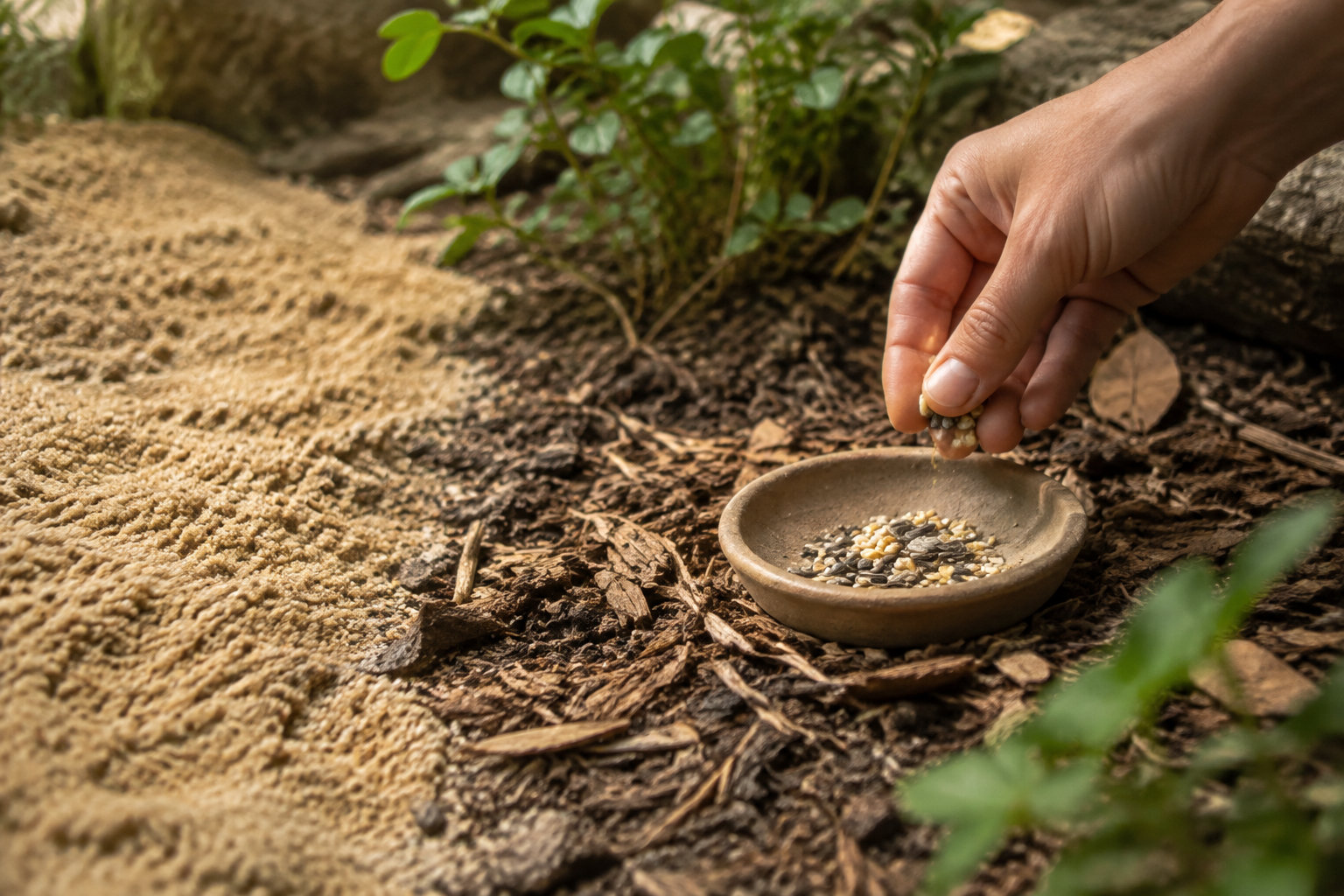
Check the habitat every day for mold, and watch the ants for any change in behavior or condition.
Keep the habitat cool and out of the light:
- Place the ant farm away from direct sunlight, since sun can raise the temperature inside and harm the ants.
- Harvester ants live longer in a cool room at 16–21°C, while high temperatures shorten their lives.
- Choose sand for a colony you plan to keep long term, and use gel only for short observation.
Sand is the right choice for most colonies, because the ants can dig their own tunnels in it. Gel only fits a short look at the ants.
Your next step is to check your species first. Then wash or bake untreated quartz sand, and dampen it until it clumps without leaving water on your fingers.
Frequently asked questions
Does The Formicarium offer free worldwide shipping?
Yes, The Formicarium offers free worldwide shipping on orders over $30. The Ant Castle Sand Farm Kit, priced at 102.95 USD, is above that threshold on its own, so an order for it alone qualifies.
How big is the Ant Castle Sand Farm Kit?
The Ant Castle Sand Farm Kit is 24 cm. That is the size of the glass nest, so check that your shelf or desk has room for it before you order.
Can schools use the Ant Castle Sand Farm Kit in classrooms?
Yes. The Ant Castle Sand Farm Kit is designed for children and hobbyists, and sand ant farms are suited to classrooms. Pupils can watch the tunnels being dug through the glass from the side of the nest during lessons.