Skip to product information
1 of 4

Ma boutique

Sand Ant Farm for Kids: glass castle, 24 cm, ants dig live

Sand Ant Farm for Kids: glass castle, 24 cm, ants dig live

Regular price €116,95 EUR
Regular price €115,95 EUR Sale price €116,95 EUR
Sale Sold out
Taxes included. Shipping calculated at checkout.
Quantity

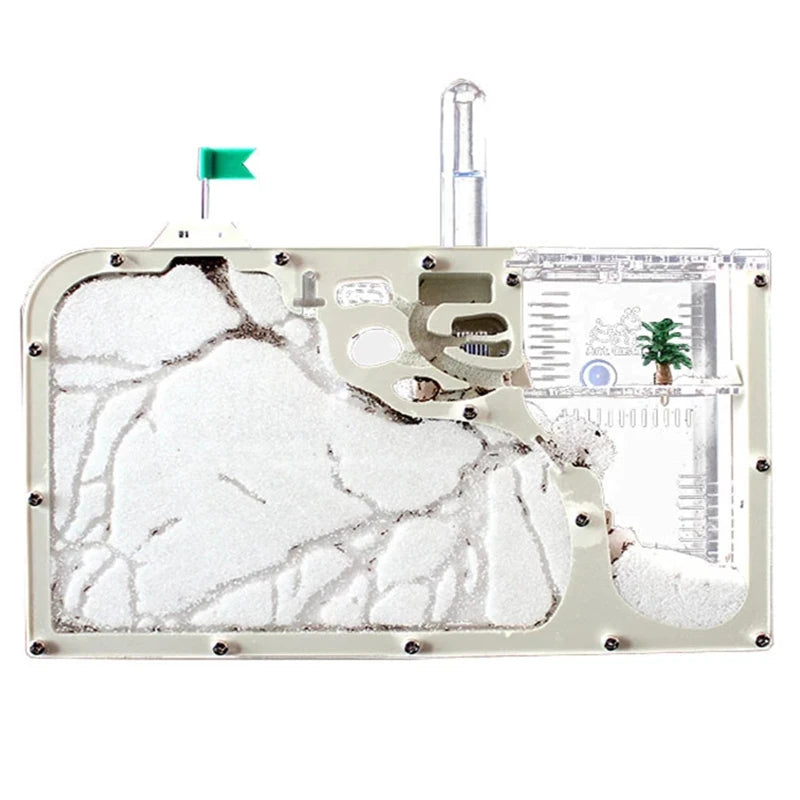
Watch real ants carve tunnels through white sand, right on your desk. This sand ant farm for kids packs a full underground colony world into a glass-and-sand enclosure that fits on any shelf, and the ants do every bit of the engineering themselves.

  • Non-toxic glass build
  • Ships with tools and sand
  • Ready to use in minutes

Most ant farms sold for kids are thin plastic trays with a single chamber. The ants fill them in a week, run out of space, and the colony stalls. This glass castle takes a different approach: six distinct zones inside a 24 cm x 15 cm x 4.5 cm frame, each connected by tunnels the ants dig themselves. There is a water supply area, a feeding zone, a breeding chamber, a sand-storage room, a working corridor, and even a small planted leisure corner with one live green plant included. The ants actually use all of it.

I set up a similar multi-zone formicarium with a small Lasius niger colony (black garden ants, the most beginner-friendly species in North America and Europe) and within 48 hours they had mapped every tunnel connection and started relocating their brood to the breeding chamber. That kind of purposeful behavior is exactly what hooks kids and adults alike. The glass panels keep the view crystal clear, and the white sand makes every tunnel visible against the background.

The frame is sealed to prevent escapes during normal use, which is the first question every parent asks. Ants are not included, because shipping live insects across state or country lines raises real regulatory issues. You source your own colony locally, which is the responsible way to do this hobby anyway.

Why this sand ant farm teaches more than any screen ever could

Live ant farm tunnels visible in real time

The white sand and clear glass panels let you watch every digging move, so the colony's progress is never hidden from view.

Six-zone ant farm layout mirrors a real colony

Dedicated breeding, feeding, water, and storage areas give ants a structured home, which means longer colony lifespan and richer behavior to observe.

Compact ant farm fits any desk or classroom shelf

At 24 cm long and 4.5 cm wide, this formicarium sits flat on a standard shelf without dominating the space, making it practical for bedrooms and classrooms alike.

Educational ant habitat ready for any beginner species

Sized for small to medium ant species, this setup works straight out of the box for Lasius niger, Formica, or any common local queen you catch during nuptial flight season.

Sand ant farm specifications: glass, dimensions, and what ships in the box

Dimensions 24 cm L x 15 cm H x 4.5 cm W (approx. 9.4 in x 5.9 in x 1.8 in)
Main material Glass panels, sealed frame
Box contents Clear glass nest, white digging sand, setup tools
Suitable species Small to medium ants (Lasius, Formica, Messor)
Chemical safety No high-concern chemicals; glass construction
Ants included No (source locally; see setup guide below)

How to set up and care for your glass ant farm the right way

  • Pour the included white sand into the enclosure first, filling it to about two-thirds of the interior height. Compact it gently so the ants have a stable substrate to start tunneling into.
  • Source your ants locally. Lasius niger (common black garden ant) is the most forgiving beginner species in North America and Europe. Catch a mated queen after a nuptial flight in summer, let her found a small colony in a test tube, then transfer when you have 10-30 workers.
  • Keep the water supply zone lightly moist, not soaked. A few drops every 2-3 days is usually enough. Overly wet sand collapses tunnels and stresses the colony.
  • Place the farm away from direct sunlight. Ants prefer dim, stable conditions. A north-facing shelf or a spot with indirect light keeps the colony calm and active.
  • Clean the glass exterior with a dry or lightly damp cloth only. Never use chemical cleaners near the enclosure; the fumes are harmful to ants even through small gaps.
  • If you keep a Lasius niger colony, plan for winter hibernation at 5-10 C (41-50 F) for 3-4 months. Move the entire farm to a cool, dark spot like a basement or a dedicated mini-fridge. The glass construction handles the temperature shift without cracking.

Who this educational ant farm is actually built for

This setup is a strong fit for kids aged 8 and up who want something more engaging than a screen, for parents looking for a genuinely educational gift that runs itself once established, and for beginner ant keepers who want a first formicarium that does not require custom drilling or DIY sealing. The six-zone layout means you are not starting with a toy; you are starting with a real habitat. Beginner ant farm keepers who plan to keep native species like Lasius niger or Formica will find the size and sand depth exactly right for a founding colony growing to a few hundred workers.

Not ideal if: you already keep a large Camponotus (carpenter ant) colony with several thousand workers, or if you want a modular system you can expand with outworld connectors. For those setups, a larger acrylic formicarium with port fittings is the better call.

Sand ant farm for kids: real questions answered before you buy

Is this ant farm the right size for a beginner colony?
Yes, the 24 cm x 15 cm x 4.5 cm glass enclosure is well-matched to a founding colony of 10-200 workers, which covers the first 6-18 months for most beginner-friendly species. Lasius niger (black garden ant) and Messor barbarus (seed-harvesting ant) both fit comfortably. If your colony grows past a few hundred workers, you would want to add a connected outworld or upgrade to a larger formicarium at that point.
How long does shipping take, and does the package arrive intact?
Shipping times vary by destination; check the estimated delivery window shown at checkout for your region. The glass panels are packed with protective material to prevent transit damage. Ants are not included in the shipment, which actually removes the biggest fragility risk: you source your colony locally, which is also the legally correct approach in most US states and countries.
Will the glass crack or the sand leak over time?
The frame is sealed at the joints, so sand stays inside during normal handling. Glass holds up well to the humidity levels a healthy ant colony needs, and it does not warp or off-gas the way some plastics do over months of use. Avoid dropping it or placing it on an uneven surface where pressure could concentrate on one corner.
How is this different from a basic gel ant farm or a plastic tray?
Gel farms use a nutrient gel as both substrate and food source, which sounds clever but limits the colony to a single chamber and often leads to bacterial growth within weeks. A single-chamber plastic tray gives ants nowhere to specialize their behavior. This six-zone glass castle with natural white sand lets the colony self-organize across dedicated areas, which means you observe real colony behavior rather than ants just wandering a corridor. The difference in what kids actually learn is significant.
View full details