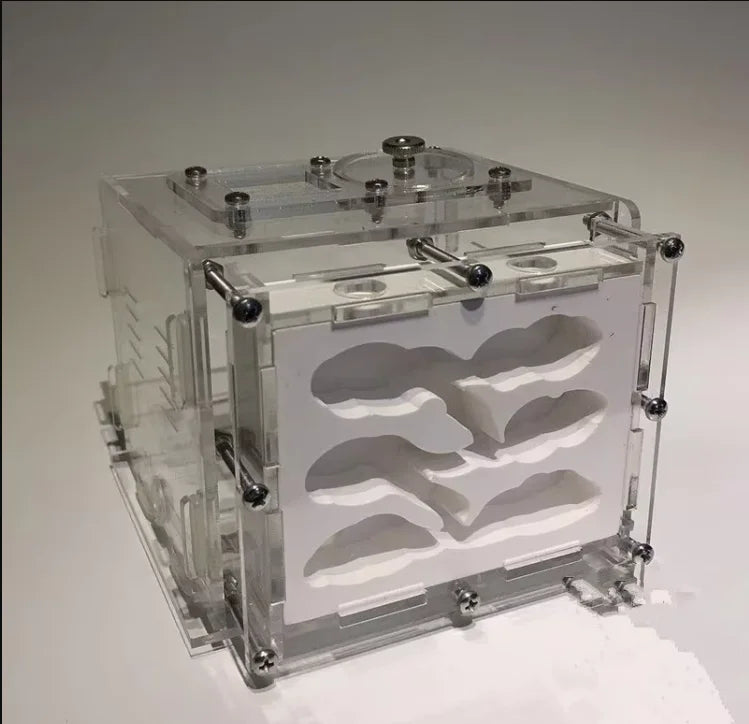
Plaster ant nest humidity that actually works
High-density plaster creates a natural moisture gradient: drier near the top, humid at the base, so your colony self-selects the comfort zone without any guesswork from you.
Free Worldwide Shipping on Orders over 30$*


Ma boutique
Couldn't load pickup availability
Your kid spots a trail of ants crossing the sidewalk and suddenly has a hundred questions. This kids DIY acrylic ant farm with plaster nest turns that curiosity into a hands-on science project they can build, water, and watch grow from day one.
Most ant farms sold as "educational toys" are sealed gel tubes. They look cool for a week, then the colony dies because there is no real humidity control and nowhere for the queen to settle. I learned that the hard way with my first setup as a kid, and I see new keepers repeat the same mistake constantly. That is exactly why this plaster-and-acrylic format exists: the high-density plaster core holds moisture in a gradient, drier at the top, slightly humid at the base, which is how a real underground nest actually works. A Lasius niger queen (the common black garden ant, the easiest beginner species in North America) will pick her preferred zone within hours of moving in.
The clear acrylic panels are thick enough to resist curious fingers and give you an unobstructed side view of every tunnel the workers carve. The DIY assembly takes about 15 minutes with no tools, which is part of the point: building it together is the first lesson. Once it is together, you add water slowly with a small syringe (5 ml for the Small, 8 ml for the Mid, adjust gradually for the Big), wait for the gradient to form, and introduce a small founding colony. The nest ships without ants, which is the right call: local species are always healthier, easier to source legally, and better adapted to your climate.
We stock these in three sizes because colony size matters more than most beginners realize. A Small nest fits a founding queen with her first 10-30 workers perfectly. Cramming a mature colony of 200 workers into a Small is stressful for the ants and frustrating for the keeper. Start right-sized, and you will actually enjoy watching them build.
High-density plaster creates a natural moisture gradient: drier near the top, humid at the base, so your colony self-selects the comfort zone without any guesswork from you.
Thick transparent acrylic walls give kids an unobstructed side view of every tunnel, chamber, and worker, turning the nest into a living science display they can study daily.
No screwdrivers, no glue: the 15-minute snap-together build is the first hands-on lesson, teaching kids how a formicarium works before a single ant moves in.
Unlike novelty toys that lose their appeal in days, a live ant colony grows, tunnels, and changes every week, giving kids a reason to check in every morning.
| Small nest dimensions | 85 mm wide x 90 mm tall x 75 mm deep | |
| Mid nest dimensions | 115 mm wide x 115 mm tall x 90 mm deep | |
| Nest material | High-density plaster core + clear acrylic panels | |
| Chemical safety | No high-concern chemicals; non-toxic plaster formulation | |
| Box contents | 1 x acrylic ant housing (nest only, ants not included) | |
| Recommended colony size | Small: founding queen + up to 30 workers; Mid/Big: growing colonies |
This nest is the right fit for kids aged 7 and up who are genuinely curious about insects, parents looking for a birthday or holiday gift that is both interactive and educational, and beginner ant keepers who want a proper plaster formicarium without spending on a full lab-grade setup. It works equally well as a classroom project or a solo bedroom science station.
It is probably not the right pick if you are already keeping a mature colony of 500-plus workers: at that scale, you will want a larger modular system. And if you are considering an exotic species that requires special permits to keep in your state, check your local regulations before sourcing any ants.