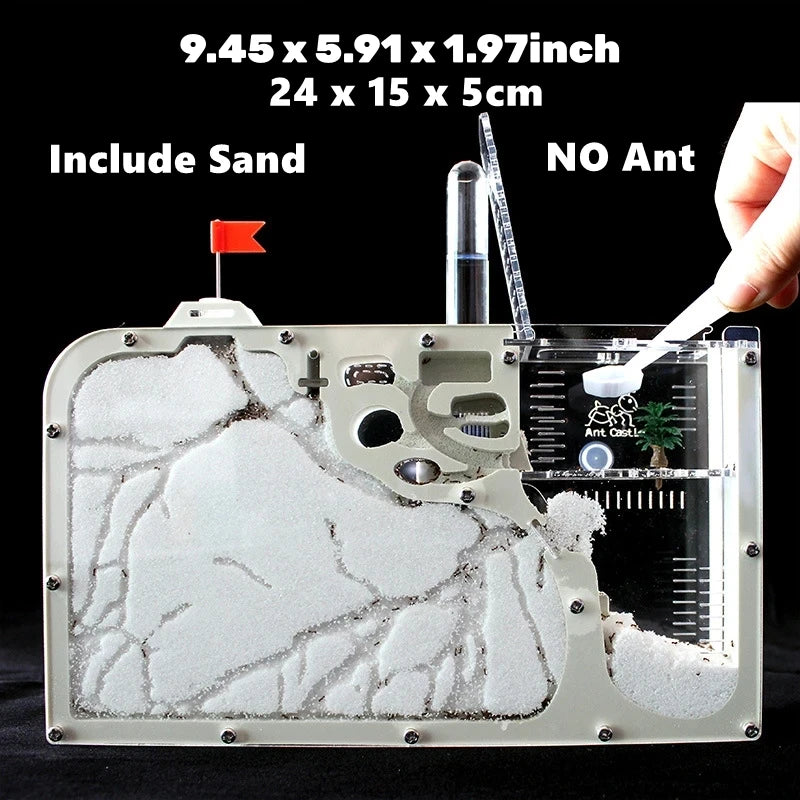
Acrylic ant habitat walls that stay clear for years
High-clarity acrylic resists yellowing and micro-scratches, so tunnel activity stays fully visible long after the colony has settled in and expanded.
Free Worldwide Shipping on Orders over 30$*


Ma boutique
Couldn't load pickup availability
Watch a living colony tunnel, sort seeds, and haul food through clear acrylic walls: the acrylic ant habitat observation kit turns any desk or shelf into a working ant colony you can actually study, not just stare at. Sand included, water tower built in, no guesswork on setup.
Most beginner ant kits on the market are either too small to sustain a real colony or built from opaque plastic that blocks the view the moment tunneling starts. This kit was designed around a different idea: give the ants enough volume to actually behave naturally, and give the keeper a clear, unobstructed window into every chamber they build. The acrylic panels stay scratch-resistant and fog-free, so six months in, you are still watching the same crisp cross-section you saw on day one.
The integrated water tower is the detail that separates this from cheaper sand-only setups. Moisture control is the single biggest reason beginner colonies fail, and a built-in reservoir lets you regulate humidity without flooding the tunnels. I have run Lasius niger (the common black garden ant, one of the best beginner species) in a setup almost identical to this one, and the water tower genuinely changes how stable the colony feels week to week. The sand substrate included is fine-grained and cohesive enough for ants to hold tunnel walls without constant collapses.
The DIY assembly is intentional. Putting the kit together with a kid, or even alone on a Sunday afternoon, is half the experience. The pieces click into place without tools, and the process itself teaches you how the habitat is structured before a single ant moves in.
High-clarity acrylic resists yellowing and micro-scratches, so tunnel activity stays fully visible long after the colony has settled in and expanded.
The integrated reservoir delivers moisture to the sand substrate gradually, keeping the humidity range ants need without waterlogging the tunnels or forcing daily intervention.
Fine-grain sand substrate is included in the box, so you can set up the habitat the same day it arrives without hunting for compatible filler material separately.
Tool-free assembly means kids and adults understand the habitat layout before the ants arrive, turning setup into a learning moment rather than a chore.
| Format | Large acrylic ant villa (exact dimensions vary by assembly configuration) | |
| Main Material | Clear acrylic (plastic), no high-concern chemicals | |
| Humidity System | Integrated water tower with reservoir | |
| In the Box | Acrylic habitat panels, water tower, fine-grain sand substrate, assembly hardware | |
| Assembly | Tool-free DIY, no adhesives required | |
| Suitable For | Beginner to intermediate keepers; children with adult supervision | |
| SKU | 14:29#Ant Castle |
This kit fits three types of keepers well. First, parents looking for a hands-on science project that holds a child's attention past the first week: the visible tunneling and daily colony activity give kids something new to observe every day. Second, beginners who have just caught their first Lasius niger queen (the common black garden ant, the most forgiving starter species in North America) and want a habitat that handles humidity without constant fiddling. Third, hobbyists who want a secondary display setup alongside a more technical formicarium for a larger colony.
Not the right fit if you are keeping a large Camponotus (carpenter ant) colony of several hundred workers or an exotic species that needs precise temperature gradients: those colonies benefit from a more modular, expandable system. For a founding colony or a small established group, this habitat is sized correctly and genuinely practical.