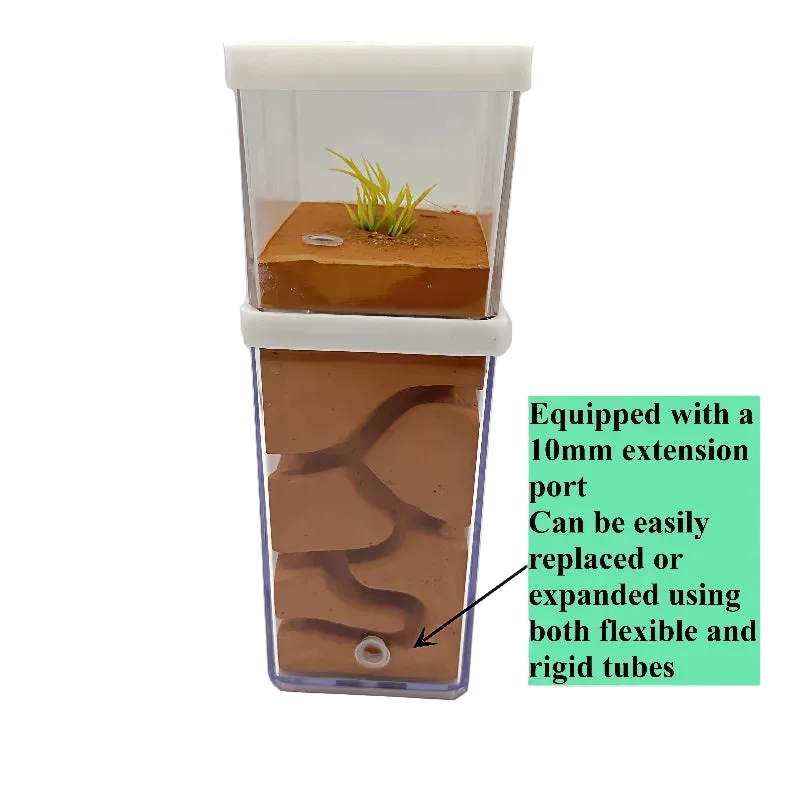
Gypsum nest humidity that stays stable for days
Moisten the plaster once and it releases moisture gradually, keeping the nest zone at the 50-70% relative humidity most common pet ant species need without daily intervention.
Free Worldwide Shipping on Orders over 30$*


Ma boutique
Couldn't load pickup availability
Your ants deserve a home that actually works. This gypsum ant farm with high-humidity castle nest keeps moisture where your colony needs it, gives you a clear view of every tunnel, and separates feeding from nesting so your workers stay busy doing what they do best.
Gypsum has been the go-to nesting material for serious keepers for a reason. It absorbs and releases moisture slowly, which means you water one side and the humidity gradient does the rest for days. Plastic nests spike and crash. Gypsum holds steady. I switched my Lasius niger (the common black garden ant, a fantastic beginner species) colony to a gypsum setup two seasons ago and stopped obsessing over the hygrometer. The castle-style tunnel layout here is not just decorative: the multi-chamber design mimics the branching galleries ants carve naturally underground, so workers actually use every room instead of crowding into one corner.
The transparent acrylic outer box is the part I appreciate most for observation. You get a full side view of the nest without disturbing the colony. The integrated feeding area keeps food and water outside the nest proper, which cuts down on mold and makes cleanup straightforward. At $67.95 for a large double-layer setup with both zones included, this sits in a practical middle ground: more functional than the novelty kits sold in toy stores, and far more affordable than custom resin builds.
Moisten the plaster once and it releases moisture gradually, keeping the nest zone at the 50-70% relative humidity most common pet ant species need without daily intervention.
The transparent outer shell gives you an unobstructed side view of colony activity, brood care, and tunnel use without opening the nest or stressing your workers.
Food and water stay in the dedicated foraging zone, away from the plaster core, so the nest stays clean and you spend less time on maintenance.
The large double-layer format gives a maturing colony room to expand across multiple chambers, reducing overcrowding stress as worker numbers climb.
| Format | Large double-layer | |
| Nest core material | Moisturizing plaster (gypsum) | |
| Outer shell | Transparent acrylic box | |
| Zones | Nest area + separate feeding area | |
| Toxicity | Non-toxic, no regulated chemicals | |
| Compatible species | All common pet ant species (0-38°C range) | |
| What is in the box | Gypsum nest unit with acrylic enclosure |
This setup fits keepers who have moved past the test-tube founding stage and want a permanent, observable home for a small to medium colony. It works well for beginners running their first Lasius niger (common black garden ant) or Formica colony, and equally for intermediate keepers housing a young Camponotus (carpenter ant) group that needs stable humidity without a lot of fuss. Parents buying a first educational ant farm for a curious kid will find the castle aesthetic genuinely engaging and the non-toxic materials reassuring.
Not the right pick if you are housing a large, mature Messor barbarus (the seed-harvesting ant) colony of several thousand workers: they will outgrow a single large unit fast and need a modular outworld system. For founding queens in a test tube, you also do not need this yet. Start simple, then upgrade.