Four rooms, natural colony behavior
Separate chambers let workers sort brood, food, and waste exactly as they would underground, cutting stress and speeding up early colony development.
Free Worldwide Shipping on Orders over 30$*

![[Four Section]Flat Ant Farm With Indepedent Rooms For Ants Keeper , Ant Hill House Nest For Small And Middle Ants Colony : rotation 360](http://theformicarium.com/cdn/shop/files/preview_images/236e91381583444d88959c98ebd9ed76.thumbnail.0000000000.jpg?v=1787720105&width=1946)


Ma boutique
Couldn't load pickup availability
Your founding queen finally has a real home. The four-section flat ant farm gives small and mid-size colonies four independent rooms in a footprint smaller than your hand, so you can watch every chamber, every tunnel, every brood pile without disturbing a single worker.
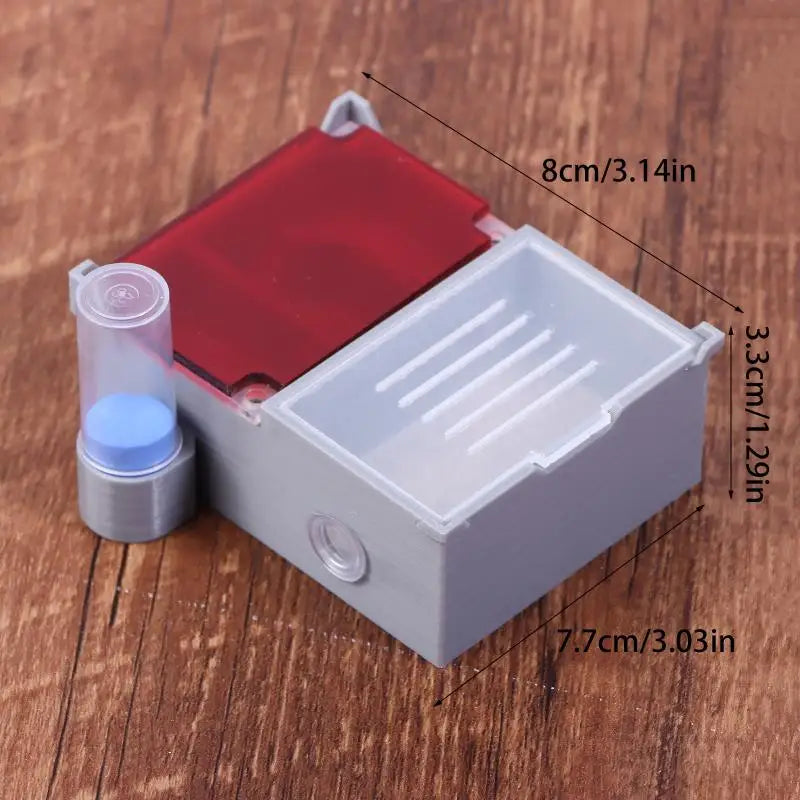
Most starter nests are either too big (a founding queen rattling around in a cavern she cannot control) or too small (workers piling on top of each other with nowhere to sort brood). This flat four-section design sits right in the middle: 8 x 7.7 x 3.3 cm, thin enough to observe from above, with four separate chambers connected by short tunnels. Workers can move brood, food stores, and waste into different rooms the way they would in a natural nest, which means less stress and faster colony growth.
I ran my first Lasius niger (the common black garden ant) queen in a setup almost identical to this one. Watching her move eggs from the main chamber into a side room the moment humidity shifted was the moment I understood why chamber separation matters. A single open cavity gives you no behavioral data. Four rooms give you a colony that actually acts like a colony.
The plastic is food-safe and free of high-concern chemicals, which matters when workers spend their whole lives pressed against the walls. At $14.95, this is the honest entry point: not a display piece for a mature supercolony, but the right tool for a queen in founding stage or a small group of 20-80 workers that needs structure without overwhelming space.
Separate chambers let workers sort brood, food, and waste exactly as they would underground, cutting stress and speeding up early colony development.
The 3.3 cm depth keeps every chamber visible from above or the side, so you catch brood-sorting, feeding runs, and queen activity without lifting a lid.
At 8 x 7.7 cm, the footprint matches what a newly-mated queen actually needs: enough space to feel secure, not so much that she abandons the brood pile.
No high-concern additives in the material, which matters when workers and larvae spend 24 hours a day in direct contact with the nest walls.
| Specification | Detail | |
|---|---|---|
| Dimensions | 8 x 7.7 x 3.3 cm (3.14 x 3.03 x 1.29 in) | |
| Number of chambers | 4 independent rooms with connecting tunnels | |
| Material | Plastic, no high-concern chemicals | |
| Color | As shown in product images | |
| Package contents | 1 complete nest set | |
| Best colony size | Founding queen to approx. 80 workers (small to mid-size colonies) |
You caught your first queen during nuptial flight season, or you just ordered a founding tube and want to give her a proper home once the first workers hatch. You are not managing a 500-worker Camponotus (carpenter ant) supercolony yet. You want something you can observe closely, keep on a desk, and actually afford while you learn the hobby.
Parents picking a first educational ant kit for a curious kid will find this size approachable: small enough to be non-intimidating, structured enough to show real colony behavior. Experienced keepers sometimes run one of these as a dedicated brood chamber or a quarantine nest for a newly-mated queen they are not ready to commit to a larger setup.
Not the right fit if your colony already has more than 100 workers, or if you keep a large species like Camponotus pennsylvanicus (the black carpenter ant). Those colonies need significantly more space from the start.
Yes, this is exactly the stage it is designed for. The overall footprint is 8 x 7.7 cm, split across four chambers, which gives a founding queen the enclosed, dark feeling she needs without the open space that stresses her into abandoning the brood pile. It comfortably houses a queen plus up to roughly 60-80 workers before you will want to connect a larger nest.
Species like Lasius niger, Formica fusca (the black running ant), and small Messor (seed-harvesting ants) are a natural match. Larger species such as Camponotus queens will feel cramped from the start, so size up for those.
Delivery times depend on your location and the shipping method selected at checkout. Tracking information is sent by email once your order ships. International shipping is available to most countries; check the shipping options on the cart page for your specific destination.
Because this is a gear item (no live animals), there are no special import restrictions on the nest itself. If you are also sourcing live ants or queens, always check your local regulations before importing any species.
The plastic holds up well for the founding and early growth stages, which is the job it is designed to do. It is not a lifetime display formicarium; it is a functional starter nest. Kept away from direct sunlight and cleaned with a dry brush rather than harsh chemicals, it stays clear and structurally sound through the colony's early months.
When your colony outgrows it, the nest transitions naturally into a satellite brood chamber connected to a larger acrylic or ytong setup, so it keeps earning its place on your shelf.
A test tube is the cheapest founding option and works fine, but it gives you one chamber with no behavioral complexity. A gel ant farm looks dramatic but the gel is nutritionally poor and can harbor bacteria; most experienced keepers avoid them. This four-section flat nest sits between the two: more structure and observation value than a test tube, and a proper food-safe environment unlike gel farms.
If you want to step up from a test tube without spending on a full acrylic formicarium yet, this is the logical next move. For a direct comparison with larger modular nests, browse the full formicarium collection to see what fits your colony's current size.
Looking for a bigger home as your colony grows? Check out the ant nest collection for modular setups that connect directly to this starter farm. New to the hobby? The beginner ant-keeping setup guide walks you through your first founding tube to your first foraging arena.