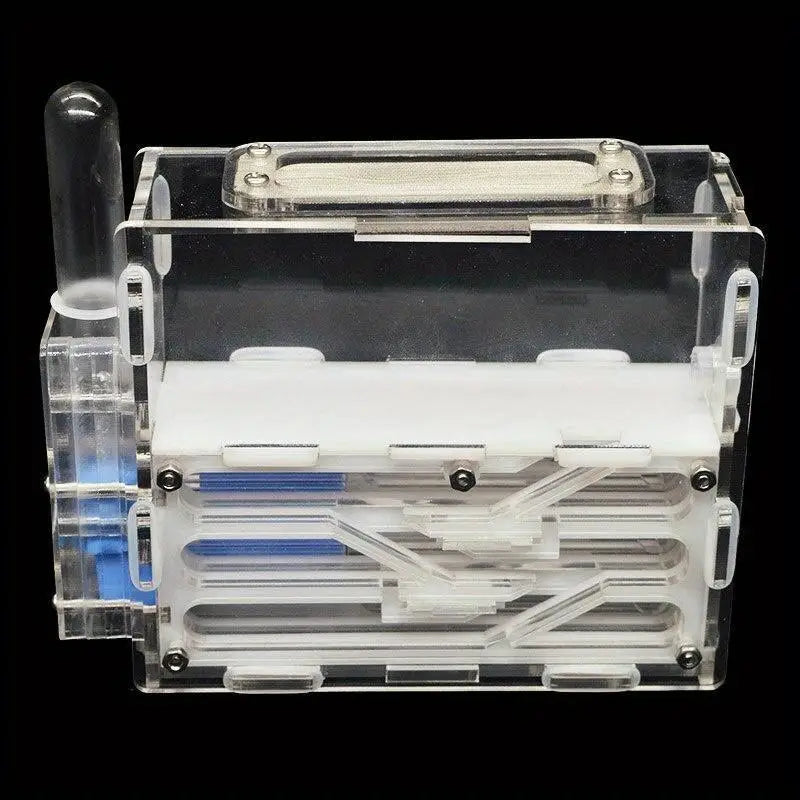
Permanent tunnels, permanent clarity
Pre-carved acrylic channels hold their shape indefinitely, so you never lose a tunnel to a collapse or a cloudy gel wall mid-colony.
Free Worldwide Shipping on Orders over 30$*


Ma boutique
Couldn't load pickup availability
You can watch a DIY acrylic ant farm for an hour and still catch something new: a tunnel being carved, a worker rerouting traffic, a queen settling into her chamber. This nest makes that possible, with a clear underground layout and a built-in feeding area that keeps your colony visible and your setup clean.
I picked up my first acrylic formicarium years ago because I was tired of sand farms that collapsed tunnels and blocked the view every other week. Acrylic changed everything. The tunnels stay put, the walls stay clear, and you actually see what is happening inside the colony instead of guessing. This particular nest takes that principle further by separating the living quarters from the feeding zone, which is the one thing most budget nests skip entirely.
The castle-style chamber layout is not just visual flair. It mirrors the natural compartmentalization ants build on their own: deeper, darker chambers for the queen and brood, shallower galleries for food storage and worker traffic. Species like Lasius niger (the common black garden ant) and Formica fusca (the black ant found across North America and Europe) settle into this kind of structured layout faster than they do in open-plan designs. The feeding area sits at the surface level, which is exactly where workers forage anyway.
Three color variants are available: White, Blue, and Yellow. The color is in the acrylic panels themselves, so it doubles as a light filter. Darker panels reduce stress on light-sensitive species. If you keep a founding queen in a test tube right now and want her first real nest to be something you can actually observe, this is a solid step up without the overkill of a full lab setup.
Pre-carved acrylic channels hold their shape indefinitely, so you never lose a tunnel to a collapse or a cloudy gel wall mid-colony.
A separate surface-level feeding area means food waste stays out of the brood chambers, which cuts mold risk and makes maintenance straightforward.
The multi-chamber design mirrors how ants naturally partition space, helping species like Lasius niger settle and begin foraging within days of introduction.
Choose White for maximum visibility, Blue or Yellow to reduce ambient light stress on species that prefer darker founding conditions.
| Measurement tolerance | Plus or minus 1-3 mm (manual production) | |
| Primary material | PET (Polyethylene terephthalate) acrylic panels | |
| Available colors | White, Blue, Yellow | |
| Package contents | 1 x acrylic ant farm (panels + feeding area) | |
| Assembly | DIY panel assembly, no tools required | |
| Suitable species | Beginner species: Lasius niger, Formica fusca, small Camponotus colonies |
This nest fits keepers who have moved past the test-tube founding stage and want their first real formicarium without spending extra on a lab-grade setup. It works well for a Lasius niger colony of 20 to 150 workers, a classroom science project that needs a clear, safe enclosure, or a parent setting up a first ant habitat for a curious kid. The castle layout makes observation genuinely engaging rather than just functional.
Not the right fit if you are keeping a large Camponotus (carpenter ant) colony above 300 workers, or an exotic species with specific humidity requirements above 80 percent. For those setups, check out our full formicarium collection for larger and humidity-controlled options.
This nest suits founding colonies up to roughly 100-150 workers, which covers most Lasius niger or Formica fusca colonies in their first one to two years. Once your colony pushes past that count, workers will start spending more time at the entry port than inside, which is your signal to connect an outworld or upgrade to a larger formicarium.
If you are starting with a single queen and a handful of workers, this is a good size: not so large that the colony feels lost, not so small that you need to upgrade in three months.
PET acrylic is more resistant to yellowing than cheaper polystyrene alternatives, provided you keep it away from direct UV exposure. A shaded indoor position is all it takes. Cleaning with water and a soft cloth (never solvents) keeps the panels clear for years.
The panels will not crack from normal colony humidity levels. If you mist the feeding area, let excess water evaporate before closing the lid to avoid prolonged moisture contact with the panel edges.
Gel farms look striking for about two weeks, then tunnels collapse and the gel clouds. Sand farms are natural but opaque: you see surface activity, not colony life. This acrylic nest keeps tunnels permanent and walls clear, so you observe actual brood care, food storage, and worker behavior rather than just movement at the surface.
The separate feeding area is also something neither gel nor sand setups offer by default. It is a meaningful quality-of-life difference once you are feeding a colony regularly. For a deeper look at formicarium types, see our guide to choosing the right formicarium.