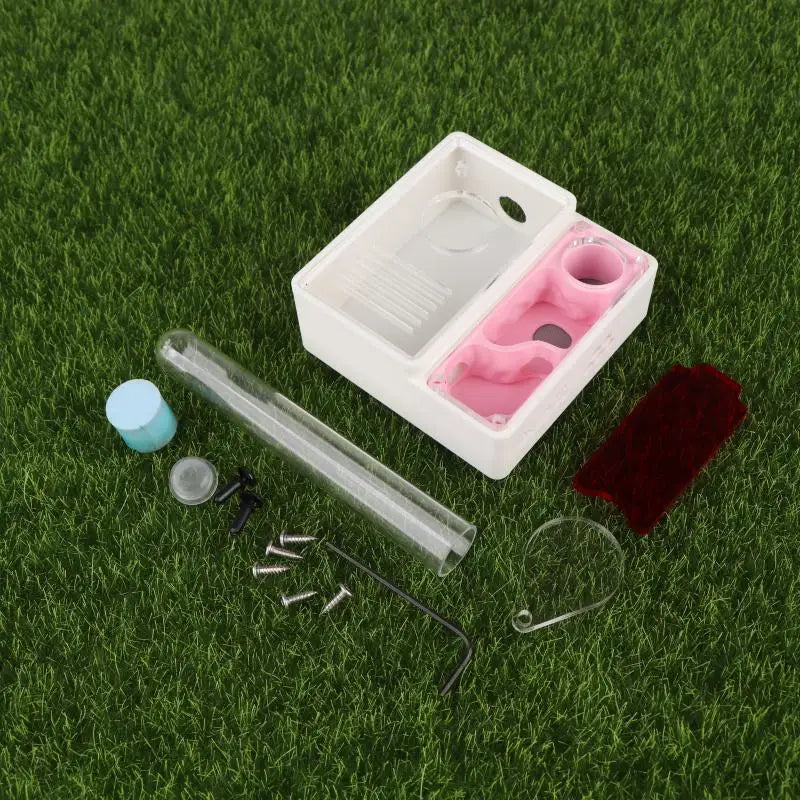
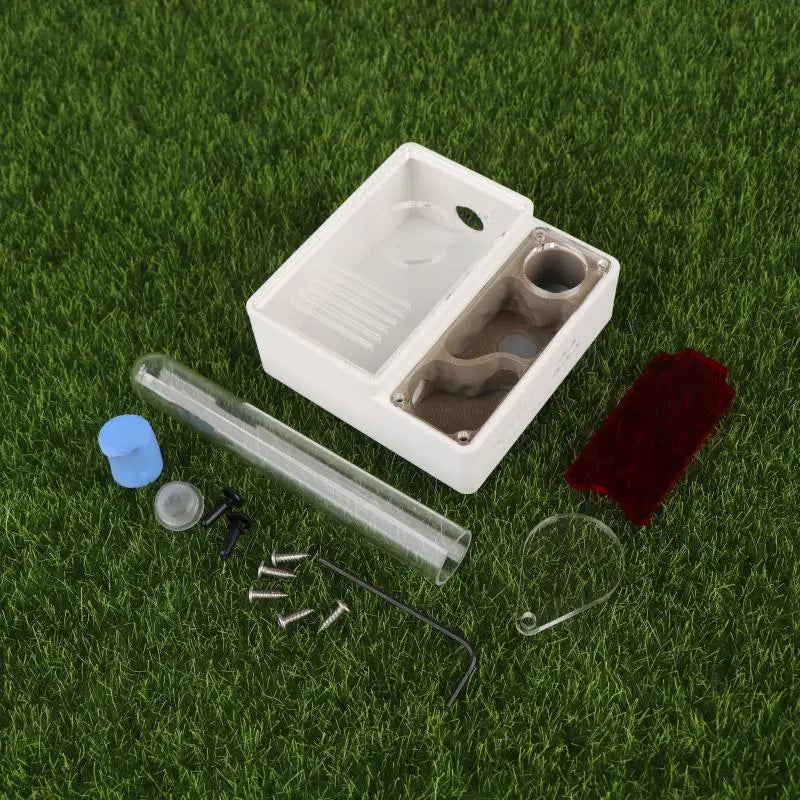
Your first queen ant just needs one thing: a 3D printed ant farm nest that fits her founding stage, keeps humidity where it belongs, and does not cost you a week's lunch money. This compact PLA formicarium is exactly that.
No harmful chemicals
Ready to use out of the box
Ships in protective packaging
When I started keeping ants, I made the classic mistake: I bought a formicarium that was way too big for a single founding queen. She spent three weeks ignoring the nest and hiding in the test tube. Size matters at the founding stage, and a chamber that is too large stresses a lone queen out. This 3D printed nest gets the geometry right. The internal chamber dimensions are tight enough to feel safe for a newly mated queen, yet the channel layout gives her room to lay her first brood without crowding.
The nest is printed in PLA, a plant-derived plastic that is non-toxic and odorless once cured. No off-gassing, no chemical leaching into the substrate. The two color variants (01 and 02) let you pick based on how you want the nest to photograph or display on your shelf. At 6.9 x 6.9 x 2.8 cm, it sits flat on any surface and pairs cleanly with a small outworld connected via tubing. It is the kind of starter setup I wish someone had handed me on day one.
This nest is sized for small ant species: Lasius niger (the black garden ant, one of the best beginner species in the hobby), Lasius flavus (the yellow meadow ant), small Formica species, and similarly compact queens. If you are working with Camponotus (carpenter ants, which run larger) or any exotic species, check your local regulations first and consider a larger formicarium from our full formicarium collection.
Why this 3D printed ant farm nest works for small species at founding
Chamber size matched to founding queens
The compact 6.9 x 6.9 cm footprint keeps a lone queen in a tight, secure space, which is exactly what she needs before her first workers hatch.
PLA ant farm material: safe and odor-free
Plant-derived PLA contains no high-concern chemicals, so you can introduce your queen the same day the nest arrives without any off-gassing wait period.
Beginner ant keeper setup that skips the learning curve
No drilling, no silicone, no assembly. Place it, add a moisture source on one side, connect an outworld, and you are done.
Affordable ant house that does not cut corners
At $15.95, this is one of the few starter nests where the price reflects simplicity of design, not a reduction in print quality or chamber accuracy.
3D printed ant nest specifications: materials, size, and what is in the box
Dimensions
6.9 x 6.9 x 2.8 cm
Material
PLA (polylactic acid, plant-derived)
High-concern chemicals
None
Color variants
01 and 02 (two options at checkout)
Package contents
1 x 3D printed ant nest
Suitable species
Small ants: Lasius niger, Lasius flavus, small Formica
How to set up and care for your 3D printed ant farm nest
Place the nest on a flat, vibration-free surface. Ants at the founding stage are sensitive to movement, so keep it away from speakers, washing machines, and high-traffic countertops.
Maintain a humidity gradient: moisten one side of the nest lightly with a few drops of distilled water every 2-3 days. Leave the other side dry. Lasius niger queens do well at 50-70% relative humidity in the brood chamber.
Keep ambient temperature between 24-28 C (75-82 F) during the active season. Avoid placing the nest in direct sunlight: PLA can warp above 60 C, and ants overheat well before that.
Clean the exterior with a barely damp cloth. Do not submerge the nest or use alcohol-based cleaners: they can degrade PLA surface finish over time.
When your colony outgrows this starter nest (typically once you reach 50-100 workers for Lasius niger), connect a larger formicarium via tubing rather than disturbing the queen. Browse our formicarium range for the right next step.
Who this beginner ant keeper nest is actually built for
This nest is the right call if you just caught your first queen during nuptial flight season, or if you ordered a founding queen from a reputable local breeder and need somewhere to put her today. It also works well as a first educational setup for kids: the compact size means the whole colony is visible at a glance, and the price means a cracked lid is not a catastrophe.
It is not the right fit if your colony already has 200-plus workers, if you are keeping a larger species like Camponotus pennsylvanicus (the black carpenter ant), or if you want a display-quality nest with a viewing window. For those situations, check out our acrylic and hybrid formicariums, which are what I run my own Camponotus colonies in.
Buying a 3D printed ant farm nest: questions new keepers ask first
Is this nest the right size for a single founding queen?
Yes. At 6.9 x 6.9 x 2.8 cm, the internal chamber is intentionally compact, which is what a founding queen needs. A nest that is too large causes stress and can lead to the queen abandoning her first egg clutch. Once your first workers hatch and the colony grows past roughly 30-50 individuals, you can connect a larger outworld or upgrade to a bigger formicarium.
How long does shipping take, and will the nest arrive intact?
Shipping times depend on your location and the carrier selected at checkout. The nest ships in protective packaging designed to prevent cracking during transit. If your item arrives damaged, contact us with a photo and we will sort it out. PLA is rigid but not brittle under normal shipping conditions.
Will PLA degrade or warp inside a humid ant setup?
PLA handles the humidity levels typical of ant keeping (50-70% RH in the brood chamber) without warping or degrading, as long as you avoid sustained heat above 55-60 C. Room temperature setups are completely fine. The material does not leach chemicals into the substrate at normal husbandry temperatures, which is why it is a common choice for beginner formicariums.
How is this different from a test tube setup or a gel ant farm?
A test tube setup is the cheapest possible founding option and works fine, but it gives you almost no visibility and no room to add a proper outworld. Gel ant farms look cool in photos but the gel is not a natural substrate, and most species do not thrive long-term in them. This 3D printed nest sits between the two: it gives your queen a structured chamber with a moisture gradient, it connects to a real outworld via tubing, and it is still inexpensive enough that upgrading later does not feel like a loss. For a deeper comparison of founding setups, see our founding setup guide.