Ma boutique
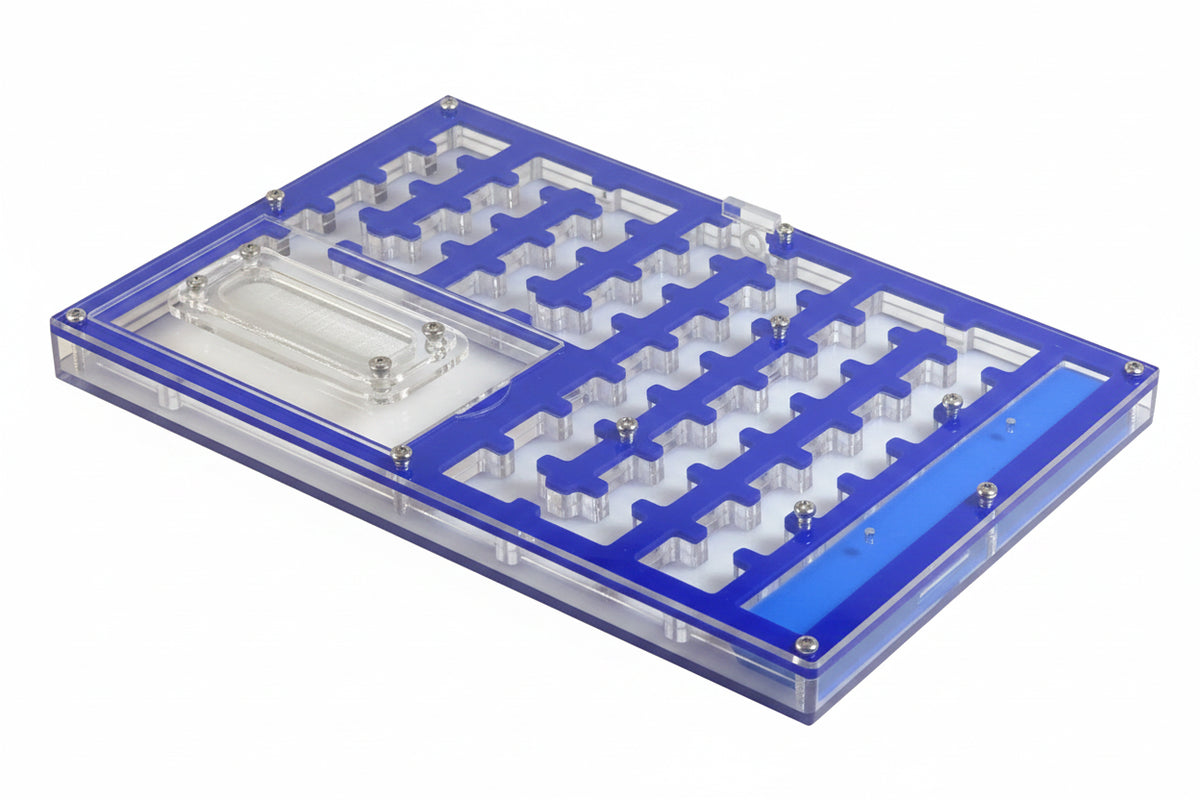
BIG Space Acrylic Ant Farm Maze with Feeding and Moisture Zone
BIG Space Acrylic Ant Farm Maze with Feeding and Moisture Zone
Couldn't load pickup availability
Technical Details
Big Acrylic Ant Farm Maze with Feeding & Moisture Zone
This large acrylic ant farm maze is built for growing colonies that need real space. The formicarium features a dedicated feeding zone and a separate moisture zone, so you can manage humidity and nutrition without disturbing the nest. The transparent acrylic walls give you a clear, unobstructed view of every tunnel and chamber. Compatible with most common ant species kept in the hobby. Check our ant keeping humidity and temperature guide to dial in the right conditions, and browse our full ant nests collection if you want to compare setups before deciding.
The Big Change
Finally, a Maze Ant Farm That Grows With Your Colony
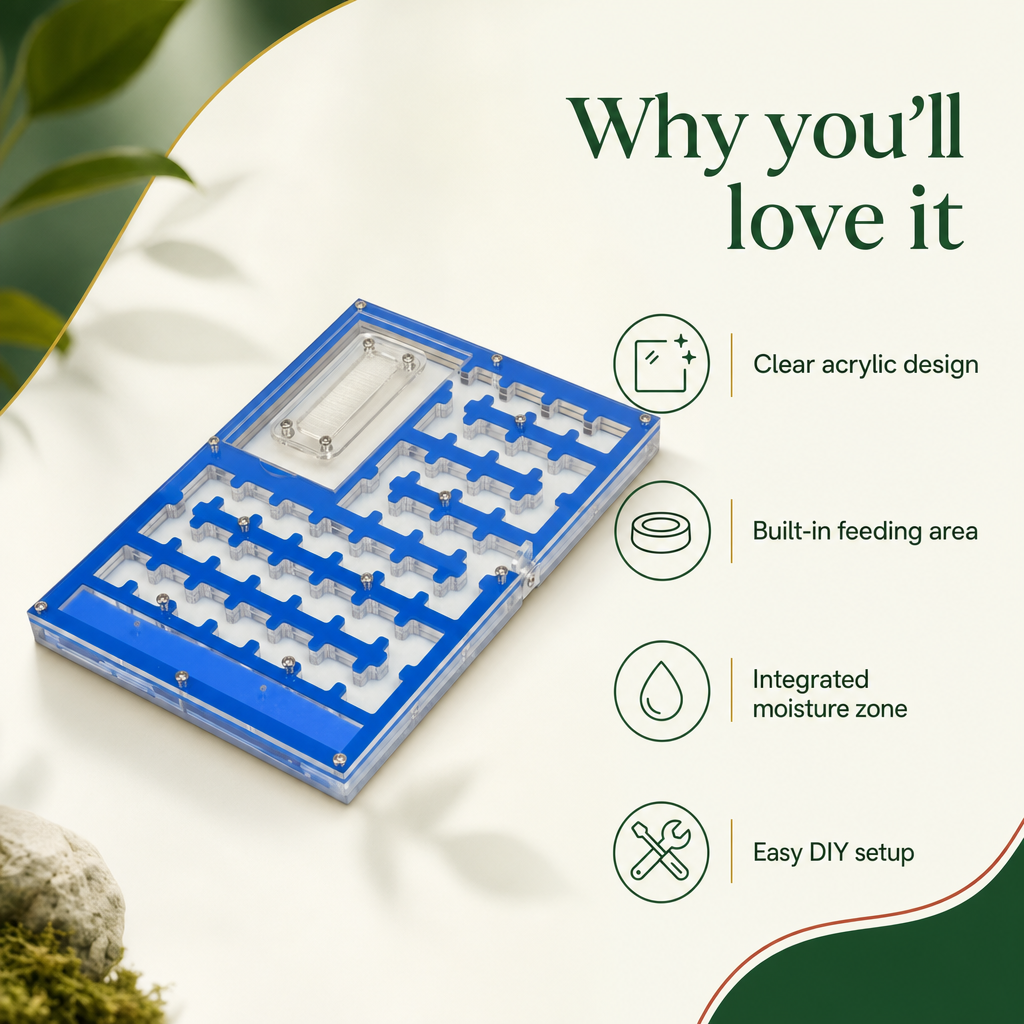
Most starter ant farms feel cramped within weeks. This big acrylic maze gives your colony the room it actually needs to expand, organize, and thrive. Watching your ants navigate a real tunnel system, claim chambers, and set up their own nursery zones is a completely different experience. You stop just keeping ants. You start genuinely observing them.
Build & Materials
Clear Acrylic, Two Dedicated Zones, Zero Guesswork
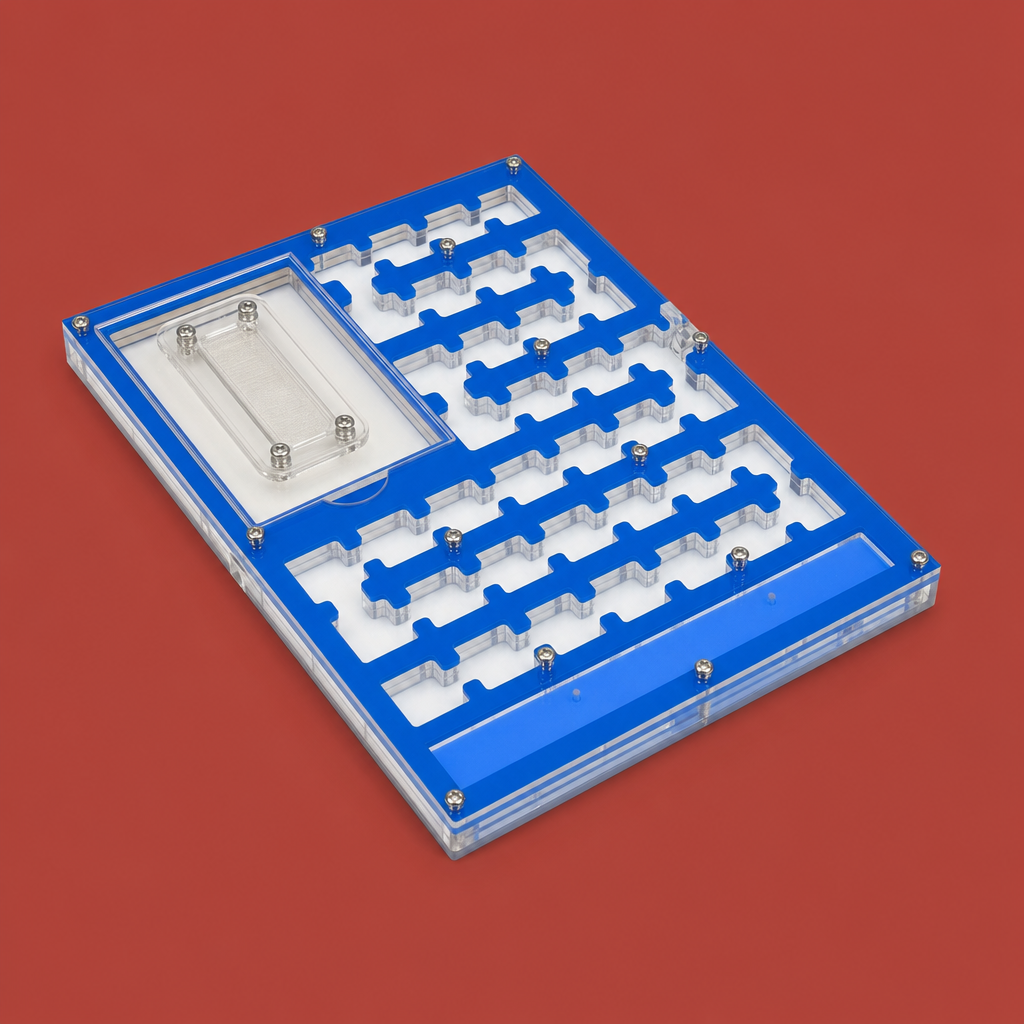
The formicarium is machined from transparent acrylic, which stays scratch-resistant and gives you a crystal-clear side view of every chamber. The feeding zone is physically separated from the nest area, so food debris never contaminates the brood. The moisture zone lets you water one controlled spot without flooding the tunnels. Two problems most ant farms ignore, solved by design.

In Real Use
Morning Coffee, Ants Already Busy in the Maze
You drop a few seeds or protein pieces into the feeding zone, add a few drops of water to the moisture port, and that is your entire maintenance for the day. Meanwhile your Lasius niger workers, the common black garden ant, are already rearranging brood through the maze tunnels. The transparent acrylic means you catch every move without lifting a lid or stressing the colony.

Keeper's Verdict
The Separate Zones Make Daily Care Genuinely Easy
In practice, the split between feeding area and nest is what keepers notice first. You never have to choose between keeping humidity up and keeping the food area dry. The moisture zone stays damp, the tunnels stay stable, and the colony regulates the rest. For species like Messor barbarus, the seed-harvesting ant, having a clean dry feeding area separate from the nest is exactly what the colony needs.
FAQ
Your Questions Answered
Is this ant farm big enough for a mature colony?
Yes. This is a large-format formicarium designed specifically for growing and established colonies that need real tunnel space and multiple chambers. It is not a founding test tube replacement but a proper long-term home once your colony is up and running.
How does the moisture zone work exactly?
The moisture zone is a dedicated area built into the formicarium where you add water to maintain humidity in the nest. It keeps the tunnels at the right moisture level without flooding the feeding area or the maze chambers, so the two environments stay independent.
What ant species work well in this acrylic maze farm?
The large size and maze layout suit most common hobby species. Lasius niger, Camponotus (carpenter ants), and Messor barbarus (seed-harvesting ants) are all good fits. If you are unsure which species to start with, our best ant species for beginners guide is a great starting point.
Can I use this as a first ant farm for a beginner?
It works well for beginners who already have a small established colony and want to move up from a test tube or starter kit. The feeding and moisture zones actually make daily care simpler, not harder, because each task has its own dedicated spot.
Is the acrylic easy to clean and maintain?
Acrylic is smooth and non-porous, so cleaning is straightforward. The separated feeding zone means food waste stays contained and does not spread through the tunnels, which keeps the overall formicarium much cleaner between maintenance sessions compared to single-chamber designs.