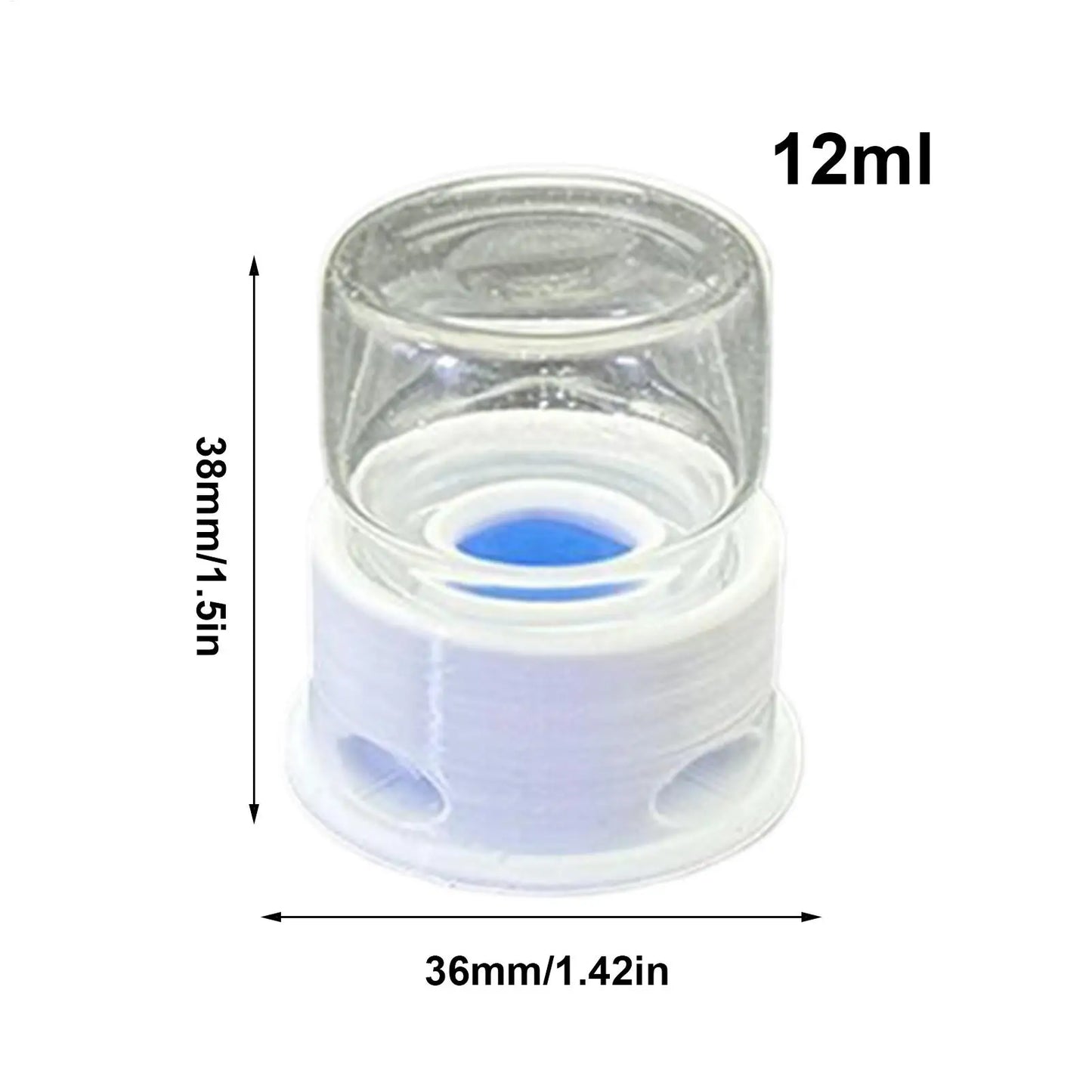
Stepped ramp keeps workers safe
The graduated interior ledges give any ant or cricket that slips a foothold to climb out, cutting accidental drowning to near zero in normal use.
Free Worldwide Shipping on Orders over 30$*


Ma boutique
Couldn't load pickup availability
Drowning is the number-one silent killer in ant and cricket setups. The ant water feeder with drowning prevention fixes that with a stepped interior that lets workers drink safely at 12ml capacity, without you babysitting the water dish every hour.
The first time I lost a Lasius niger worker (the common black garden ant) to a water dish, I had used a bottle cap. Flat surface, no grip, no exit. She slipped in and that was it. After that I tried cotton-stuffed tubes, pebble-filled dishes, and damp sponge pads. They all worked, but they all introduced mold risk or required constant replacement. A dedicated feeder with a built-in stepped ramp is the cleaner answer.
This feeder is made from food-safe clear plastic, so you can actually see the water level without disturbing the setup. The stepped interior creates graduated ledges: a worker that slips finds a foothold before she reaches the bottom. At 3.6 x 3.8 cm, it fits inside most founding test tubes, outworld trays, and classroom observation kits without taking up half the floor space. The smooth inner walls mean no biofilm traps, and a quick rinse under the tap is all the maintenance it needs.
I keep one in every outworld I run, including the acrylic nests we stock for Camponotus (the carpenter ant genus, big and thirsty). For bees, crickets, or any arthropod that needs open water access, the same logic applies: graduated steps, clear walls, 12ml of capacity that lasts a small colony several days between refills.
The graduated interior ledges give any ant or cricket that slips a foothold to climb out, cutting accidental drowning to near zero in normal use.
A founding colony of 20-50 workers can go two to three days between refills, so you spend less time opening the setup and stressing the queen.
Transparent plastic lets you check the water level and watch drinking behavior at a glance, without lifting lids or disturbing the colony's humidity zone.
No dead corners, no porous surfaces. A quick rinse removes any algae or mineral deposits, keeping the water source hygienic between refills.
| Dimensions | 3.6 x 3.8 cm (1.42 x 1.5 in) | |
| Capacity | 12 ml | |
| Material | Clear food-safe plastic, no high-concern chemicals | |
| Color | White / transparent body | |
| Key feature | Stepped interior, leakproof, deformation-resistant walls | |
| Box contents | 1x transparent ant water feeder | |
| Compatible setups | Ant farms, outworlds, cricket terrariums, classroom observation kits, bee observation boxes |
This feeder is the right call if you are running a founding colony in a test-tube setup or a small outworld, managing a classroom ant farm where kids check the setup daily, or keeping crickets as feeder insects and tired of finding casualties in the water dish every morning. It also works well for anyone who keeps solitary bees in observation boxes and needs a reliable, visible water source that does not require daily attention.
It is probably not the right fit if your colony has scaled to several thousand workers and needs a much larger water reservoir, or if you are running a species that requires a fully sealed humid chamber rather than open water access. For larger colony water solutions and outworld accessories, check the rest of the accessories range.
If you are just starting out and still figuring out your first setup, the ant water feeder with drowning prevention is one of the few pieces of gear I would call a genuine first purchase rather than an upgrade. Get the basics right before you spend on anything fancier.