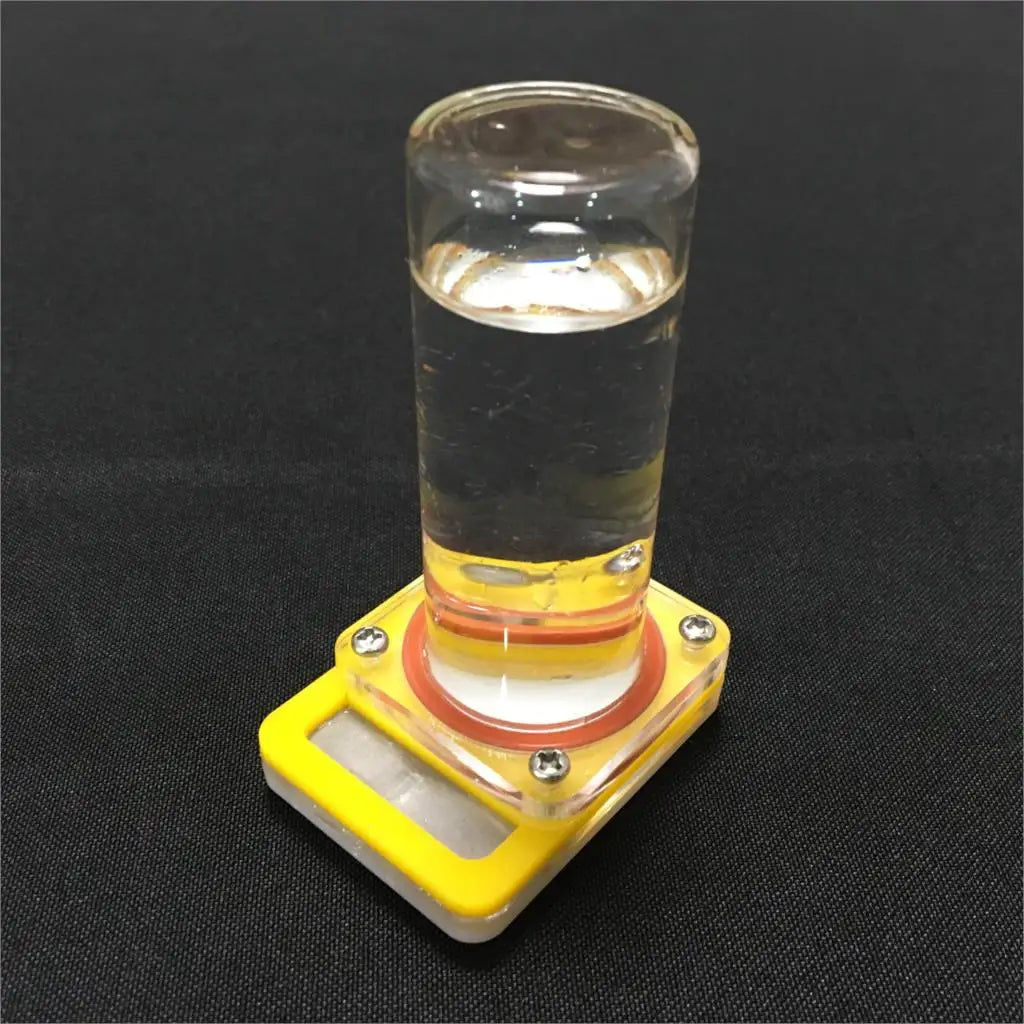
Your colony needs water every single day, and a tipped cotton ball is not a system. The ant farm water feeder keeps moisture exactly where your ants need it, without flooding the nest or leaving you guessing.
3 sizes, one fits your setup
Slow-release moisture, days at a time
Fits most acrylic and ytong formicariums
I used to soak a piece of cotton wool and wedge it into a corner of the outworld. It worked, sort of, until it dried out in 18 hours or the ants dragged it somewhere unhelpful. The first time I dropped a proper water feeder into my Lasius niger (the common black garden ant, a perfect beginner species) outworld, the workers found it within minutes and the whole setup stayed at a stable humidity for three days without me touching anything.
This feeder uses a grape-shaped acrylic body with a built-in absorbent wick pad. You fill it once, the wick draws moisture up at a controlled rate, and the ants drink from the surface without any drowning risk. The base footprint is 5.5 x 4 cm, so it sits flat in any standard outworld without tipping. Three height options, 4 cm, 6 cm, and 8 cm, let you match the reservoir volume to your colony size: 15 mL for a founding setup, 25 mL for a small established colony, 35 mL for a larger foraging chamber.
The acrylic is clear enough to see the water level at a glance, which matters more than it sounds when you are managing three setups at once. White and green color options let it blend into a naturalistic outworld or stand out as a visual landmark your ants will learn to locate fast.
Why a controlled ant farm water feeder changes your daily routine
Ant farm moisture control without daily refills
The wick-fed reservoir holds up to 35 mL and releases water slowly, keeping the drinking surface consistently damp for 48 to 72 hours between top-ups.
Zero drowning risk for small ant workers
The wick surface stays moist but never pools, so even the smallest minor workers in a Camponotus or Lasius colony can drink safely without getting trapped in standing water.
Three sizes to match your colony's actual water demand
Pick the 15 mL H4 for a founding tube setup, the 25 mL H6 for a colony under 200 workers, or the 35 mL H8 when your foraging chamber hosts a mature group that drinks heavily.
Acrylic build that fits standard outworld connectors
The 5.5 x 4 cm flat base sits stable on any smooth surface, and the compact footprint leaves room for a food dish and a protein source in even a small outworld tray.
Acrylic ant water feeder specifications: sizes, materials, and what is in the box
Base footprint
5.5 x 4 cm (all sizes)
Height options
H4 cm / H6 cm / H8 cm
Reservoir volume
15 mL (H4) / 25 mL (H6) / 35 mL (H8)
Wick pad width
3 cm diameter
Main material
Clear acrylic (PMMA)
Color options
White / Green
Box contents
1 x water feeder body, 1 x wick pad
How to set up and maintain your ant farm water feeder correctly
Place the wick pad inside the feeder, then fill the reservoir with plain dechlorinated water or filtered tap water. Distilled water works too.
Set the feeder in the outworld area, away from the nest entrance. Ants will locate it on their own, usually within a few hours.
Refill when the water level drops below the halfway mark. With the 35 mL version and a colony of 300 to 500 workers, that is roughly every 2 to 3 days in a warm room.
Rinse the wick pad under running water once a week to prevent biofilm buildup. Replace the pad if it discolors or starts to smell.
Do not add vitamins, honey, or sugar to the water reservoir. Use a separate feeding dish for liquid foods. Sugary water in the feeder will grow mold within 24 hours.
Who this acrylic ant water feeder is built for
You are keeping a small to mid-size colony, anywhere from a freshly mated queen in a test tube to a group of 500 workers in a proper outworld setup. You have already figured out that cotton wool and bottle caps are not sustainable long-term, and you want something that looks clean, works reliably, and does not require daily attention. Beginners setting up their first Lasius niger or Formica colony will find the H4 size a perfect starting point. Keepers running multiple species simultaneously will appreciate having a standardized, refillable station they can drop into any outworld without adapting the layout.
Not the right fit if you are keeping a species that needs very high ambient humidity across the entire nest substrate, like certain tropical Camponotus or Oecophylla (weaver ants). Those setups need a misting routine or a humidity-controlled chamber, not just a drinking station.
Ant farm water feeder: questions keepers ask before buying
Which size should I pick for my colony?
The H4 (15 mL) works well for founding setups and colonies under roughly 100 workers. The H6 (25 mL) covers colonies from 100 to 400 workers comfortably. The H8 (35 mL) is the right call for larger groups or if you travel and cannot refill every other day. When in doubt, size up: a larger reservoir just means fewer refills, not any downside for the ants.
How long does shipping take, and will the feeder arrive intact?
The acrylic body ships in protective packaging. Standard delivery times vary by destination, and you will receive a tracking number once your order ships. If anything arrives damaged, contact us with a photo and we will sort it out quickly. International orders are welcome; check your local customs rules for small plastic items if you are outside the US.
Will the wick pad get moldy or clog over time?
With plain water and a weekly rinse, the wick pad stays clean for several weeks before needing replacement. Mold only becomes a problem if you add sugar-based liquids or let the pad sit dry and then rewet it repeatedly. Replacement pads are inexpensive and widely available in ant-keeping supply shops. Rinsing it under the tap for 30 seconds once a week is genuinely all the maintenance this needs.
How is this different from just using a wet cotton ball or a bottle cap?
A cotton ball dries out in hours, tips over, and gets buried by workers who treat it as nest material. A bottle cap pools water and drowns minor workers. This feeder holds a measured reservoir, releases moisture at a controlled rate through the wick, and sits stable on its flat base. The clear acrylic also lets you see the water level without disturbing the colony, which is a small thing that saves a lot of unnecessary stress for both you and the ants.
Setting up a full outworld? Pair this feeder with a formicarium and outworld setup from our acrylic nest range, or browse our ant-keeping accessories collection for food dishes, test tube plugs, and founding kits. If you are just getting started, our beginner ant-keeping setup guide walks you through everything you need before your first queen arrives.