


Ma boutique
Ant Colony Box - Plaster Nest with Feeding Area, 12×6×10 cm
Ant Colony Box - Plaster Nest with Feeding Area, 12×6×10 cm
Couldn't load pickup availability
Technical details
Plaster ant farm nest box, 12x6x10cm
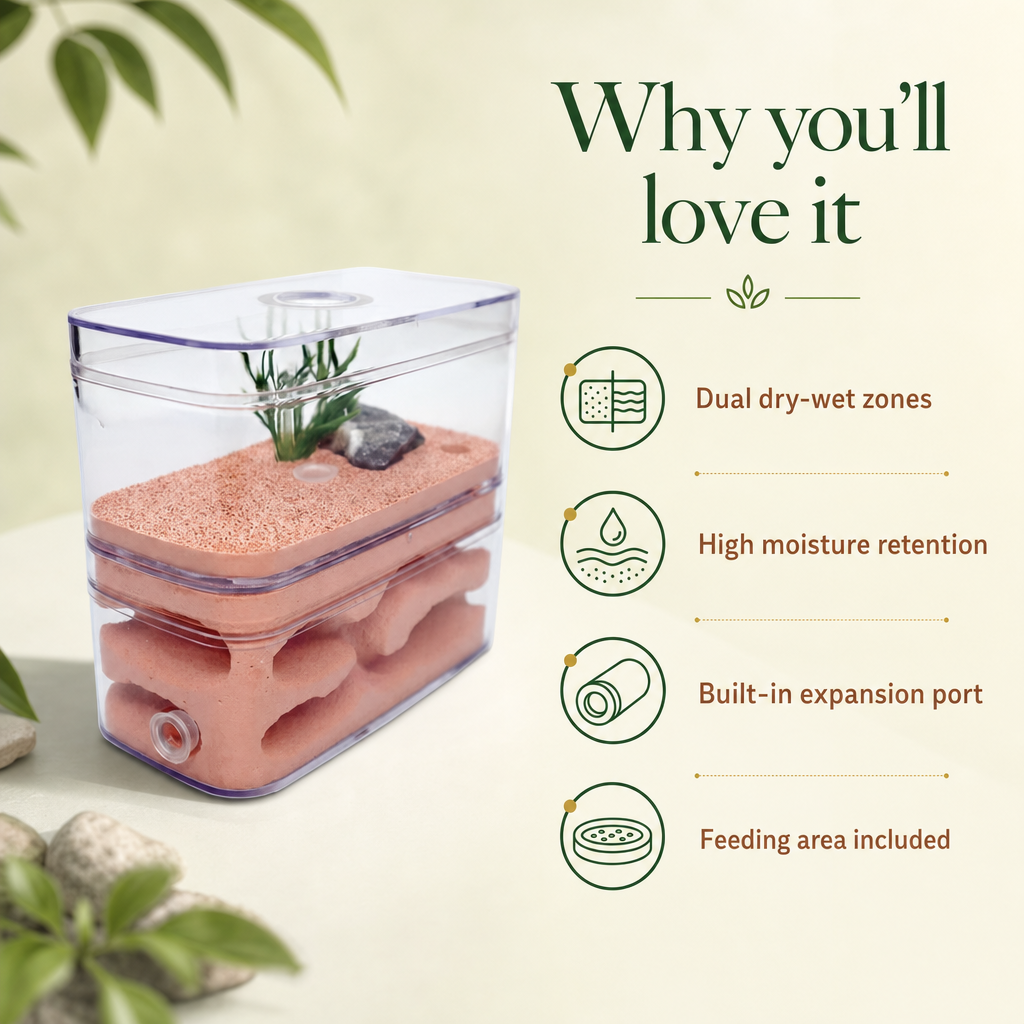
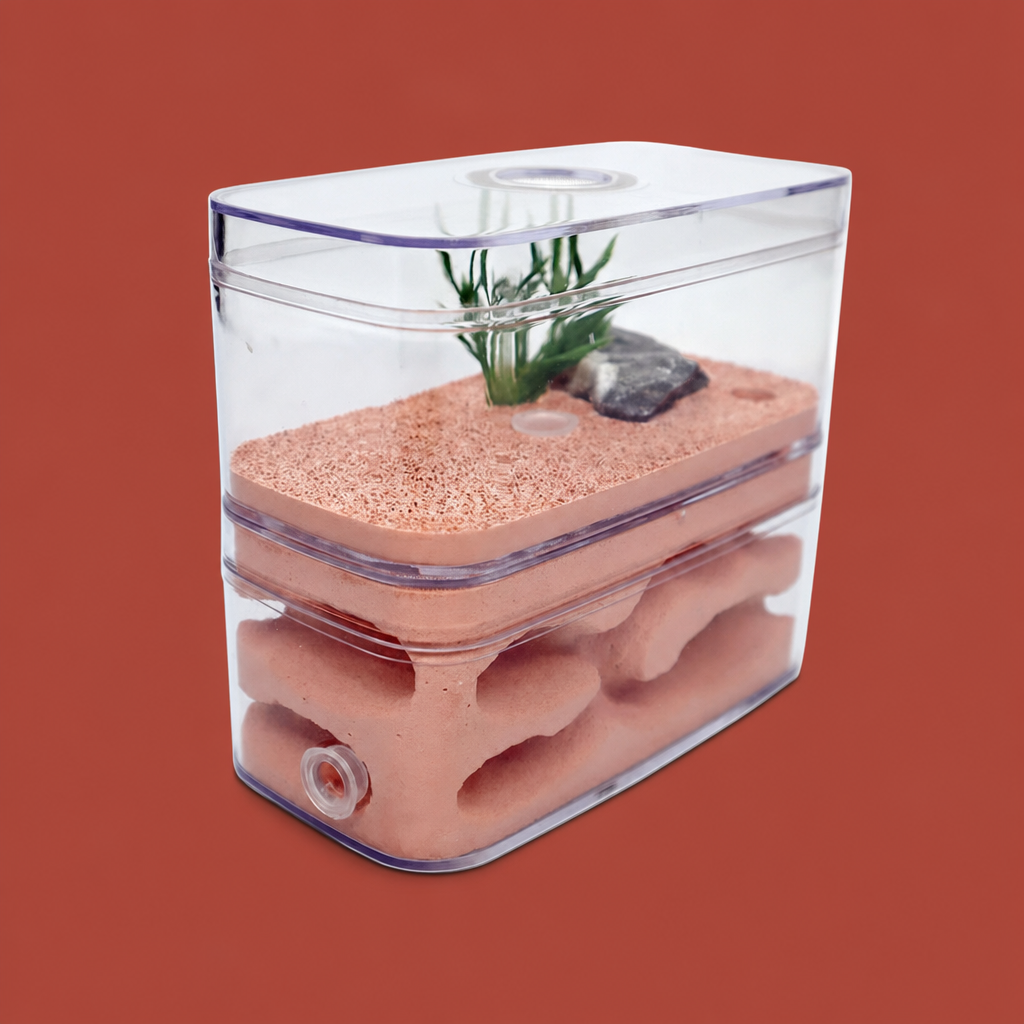
This plaster ant farm nest box is built for small to mid-sized colonies that need reliable humidity control. The PC shell houses two separate chambers: a 12x6x5cm nesting section and a 12x6x6cm feeding area. Ecological gypsum (plaster) absorbs and releases moisture slowly, creating a stable humidity gradient without chemicals. One expansion port lets you connect an additional nest module as your colony grows. Works well for beginner-friendly species like Lasius niger or Messor barbarus, whose humidity and temperature needs are well documented. Not suited for large or arboreal colonies.
The benefit
Humidity where your colony actually needs it
Most beginner nests dry out fast, and that is when colonies struggle. This plaster nest box keeps the nesting chamber humid while the feeding area stays dry, so your workers, whether you are keeping Lasius niger (the common black garden ant) or Messor barbarus (the seed-harvesting ant), can move to the microclimate that suits them. You stop guessing and start watching your colony thrive. Check our full range of ant nests if you want to compare options.
Product details
Gypsum plaster nest built to last seasons
Ecological gypsum has been the go-to material for serious ant keepers for a long time. It absorbs water slowly and releases it even more slowly, which is exactly what creates a stable humidity gradient inside the nest. The rigid PC shell keeps everything in shape. No harmful chemicals are used anywhere in the build. One expansion port means you can connect a second plaster nest module when the colony outgrows this one, no full rebuild needed.
In use
Set it up, water it, watch them move in
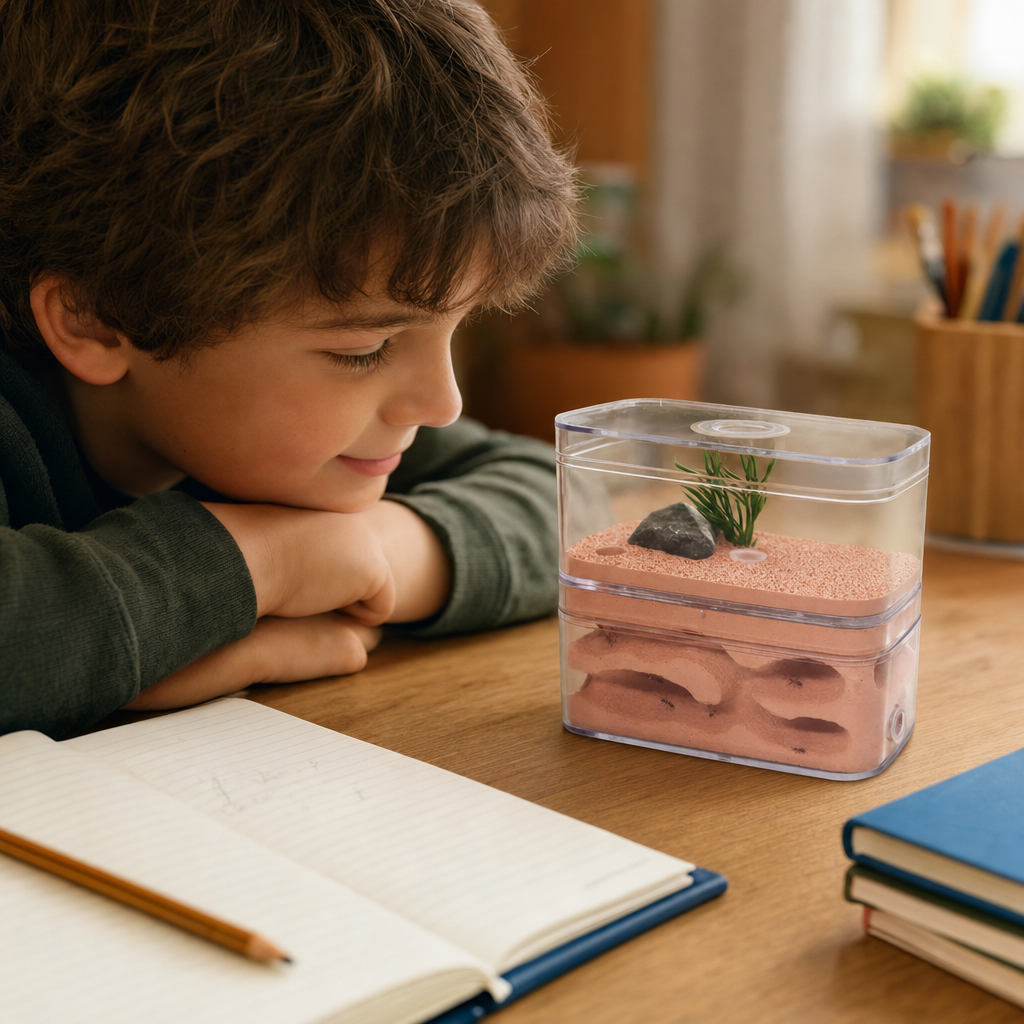
Dampen the gypsum nesting side, leave the feeding area dry, and connect the two chambers. Your workers will sort out the rest. Drop food into the feeding zone without worrying about moisture ruining it. When the colony grows, plug a second module into the expansion port. The whole setup takes minutes, and it is ready to connect straight out of the box. A solid first plaster ant farm for a founding queen or a young colony.

Field test
Two seasons, one gypsum nest, still going
Anton ran a similar dual-chamber gypsum setup for a small Lasius flavus colony (the yellow meadow ant) for two full seasons. Moisture retention was noticeably better than single-piece acrylic nests of similar size. The divider between the nesting and feeding zones is the detail that matters most: it is the single most common mistake in beginner setups to waterlog the food area, and this design makes that mistake nearly impossible.
FAQ
Your questions answered
What ant species work best in this plaster nest box?
It suits small to mid-sized colonies well. Lasius niger (the common black garden ant) and Messor barbarus (the seed-harvesting ant, popular with beginners) are both good fits. The stable humidity gradient the gypsum creates matches what a founding queen or a young colony actually needs.
How do I keep the nest humid without flooding the feeding area?
The nest is split into two separate chambers. You dampen the gypsum nesting side and leave the feeding area dry. The divider does the work for you. This separation is the key design feature: it prevents the most common beginner mistake of waterlogging the food zone.
Can I expand this nest later when my colony grows?
Yes. There is one expansion port built into the nest. You can connect a second nest module directly to it when the colony outgrows this one. You are not starting over from scratch, you are just adding on.
Is the plaster material safe for my ants?
The nest uses ecological gypsum with no harmful chemicals. Gypsum (plaster) has been the standard nest material for serious ant keepers for a long time precisely because it is safe, stable, and effective at managing humidity.
What are the exact dimensions of each chamber?
The overall nest measures 12x6x10cm. Inside, the nesting chamber is 12x6x5cm and the feeding area is 12x6x6cm. The PC shell holds both sections rigid. These dimensions make it a compact but functional setup for a founding queen or a small young colony.


