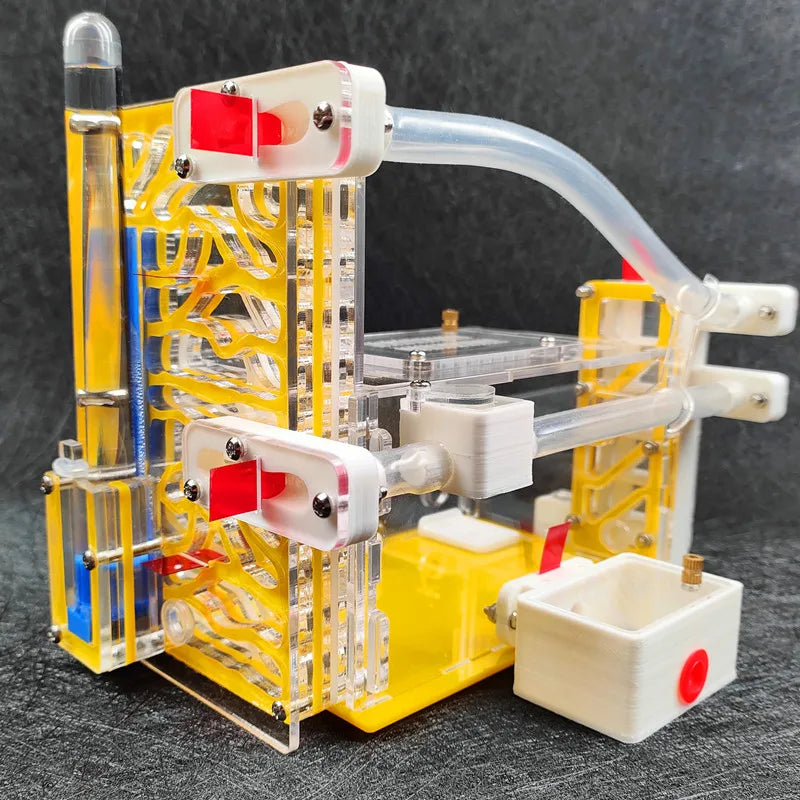
Acrylic ant farm with passive humidity control
The cotton-wicked water tower keeps nest humidity stable without daily misting, which is the single biggest frustration for new keepers.
Free Worldwide Shipping on Orders over 30$*


Ma boutique
Couldn't load pickup availability
Seven stacked nest chambers, a built-in water tower, and a suspended feeding tray: the 3D-B1 acrylic ant farm formicarium packs more functional real estate into 21 x 11 x 15 cm than most setups twice its size. Your colony gets a proper home. You get a clear view of every tunnel.
Most beginner formicariums force a compromise: either you get decent humidity control or you get a clear view of the colony, rarely both. The 3D-B1 was built around the idea that a keeper shouldn't have to choose. The moisturizing water tower feeds a cotton column that wicks moisture into the nest chambers passively, so you're not opening the lid every other day to mist by hand. That matters a lot when your Lasius niger colony (the common black garden ant, and honestly the best beginner species out there) is in its founding phase and hates disturbance.
The seven layered nest rooms connected by three double-channel tunnels give a mid-size colony real room to organize: brood in the warm core, workers rotating through the outer chambers, garbage hauled to the dedicated external waste area. That last feature alone separates this unit from cheaper flat-panel designs where waste builds up inside the nest and tanks humidity balance. I ran a Messor barbarus colony (the seed-harvesting ant from southern Europe and North Africa) in a similar stacked-chamber setup for eight months, and the behavioral complexity you see when ants actually have vertical space to work with is something else entirely.
The suspended feeding tray and external water feeder keep food and water completely outside the nest zone, which means no mold creeping into the chambers from a forgotten cricket leg. At 0.7 kg and 21 cm long, it fits on a standard desk shelf without dominating the room. The Big variant adds an extended nest room and reservoir for colonies that have outgrown the base configuration. Available in red, blue, and yellow acrylic if you want something that looks intentional on a shelf rather than like lab equipment.
The cotton-wicked water tower keeps nest humidity stable without daily misting, which is the single biggest frustration for new keepers.
Stacked rooms let workers self-organize brood, food storage, and waste across distinct zones, exactly what you see in a natural nest cross-section.
Food and water stay outside the chambers entirely, so a forgotten protein source can't spike moisture or introduce fungus into the brood area.
The Big variant ships with an additional nest room and reservoir so you're not buying a second formicarium six months from now when your workers number in the hundreds.
| Dimensions | 21 cm (L) x 11 cm (W) x 15 cm (H) | |
| Weight | 0.7 kg | |
| Material | ABS acrylic plastic, no high-concern chemicals | |
| Color variants | Red, Blue, Yellow (standard); Big (clear, extended) | |
| What's in the box | 1 extended nest room, 3 double ant channels, 7 layered nest rooms, 1 water tower, 1 cotton column, 1 extended reservoir, 1 movable garbage area, 1 suspended feeding tray, 1 external water feeder, 1 feeding plate | |
| Recommended age | 14 and up (adult supervision under 18) | |
| Compatible species | Lasius niger, Messor barbarus, Camponotus, Formica, honeypot ants, big-headed ants, most small-to-medium colony species |
This setup is a strong fit if you're past the test-tube founding stage and ready to give a small-to-medium colony a permanent home. It works especially well for beginner ant keepers who want passive humidity management without buying a separate outworld and connecting tubing. Parents setting up a first educational colony for a teenager will find the clear acrylic and labeled zones genuinely useful for explaining what's happening inside. Experienced keepers running a secondary species alongside a main colony will appreciate the compact footprint.
It's probably not the right call if you're managing a mature Camponotus pennsylvanicus (the black carpenter ant, a large North American species) colony of 500 workers or more: they'll fill this unit in a season and need a larger modular formicarium system. For army ants or any highly aggressive exotic species, check your local regulations before acquiring the colony, and look at purpose-built containment setups instead.