


Ma boutique
3D Printed Ant Formicarium with Water Tower
3D Printed Ant Formicarium with Water Tower
Couldn't load pickup availability
Technical Details
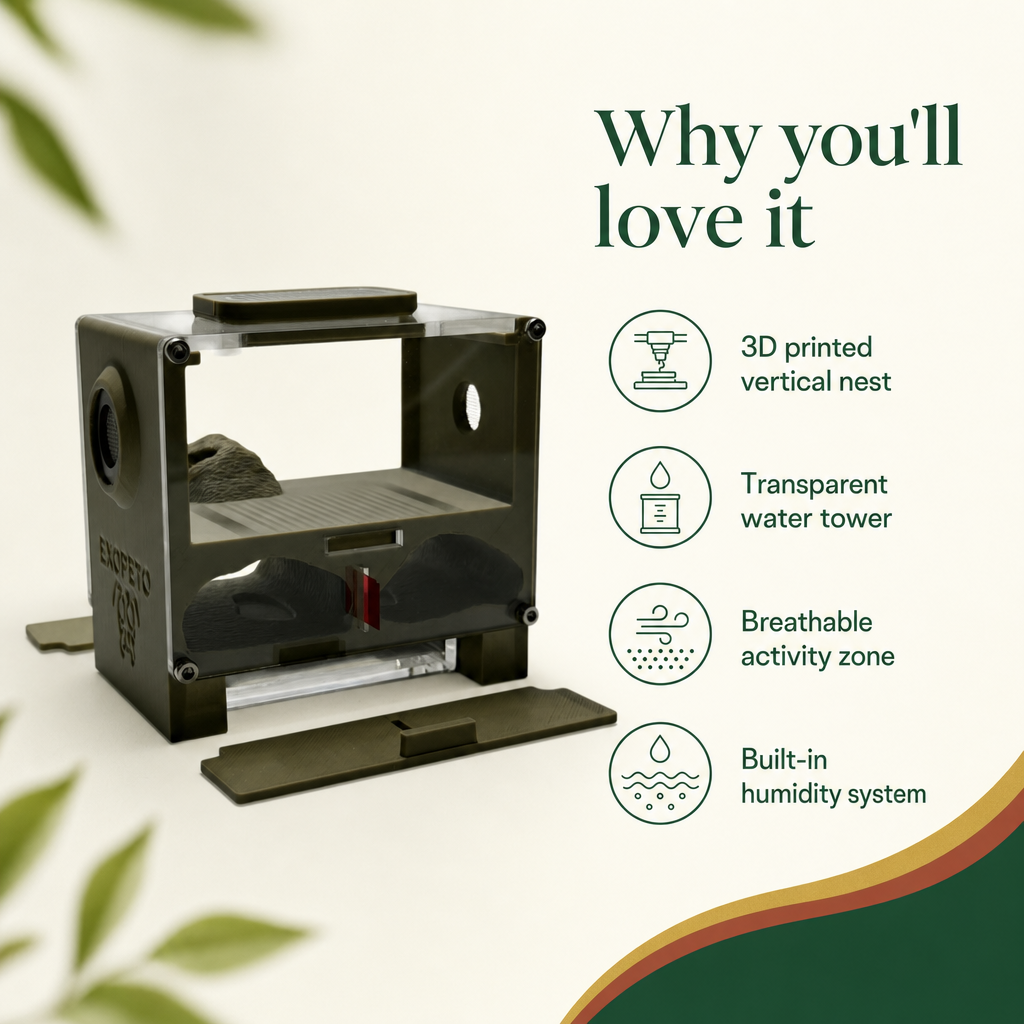
3D Printed Formicarium with Water Tower Humidity System
This 3D printed formicarium features a built-in water tower humidity system that passively diffuses moisture through the nest chambers, keeping conditions stable without daily intervention. Designed for small to medium ant colonies, it suits popular beginner species like Lasius niger (the common black garden ant) or Messor barbarus (the seed-harvesting ant). The nest is made from 3D printed PLA material with a transparent water tower so you can monitor water levels at a glance. Check our ant keeping humidity and temperature guide before setting up, and browse our full ant nests collection to compare options.
The Big Change
Humidity That Works While You Sleep
Keeping the nest at the right moisture level is one of the trickiest parts of ant keeping, especially when you are just starting out. This 3D printed formicarium with its water tower humidity system takes that stress off your plate. The passive diffusion does the work for you, so your colony stays comfortable and you stop second-guessing whether the nest is too dry or too wet.
Build & Materials
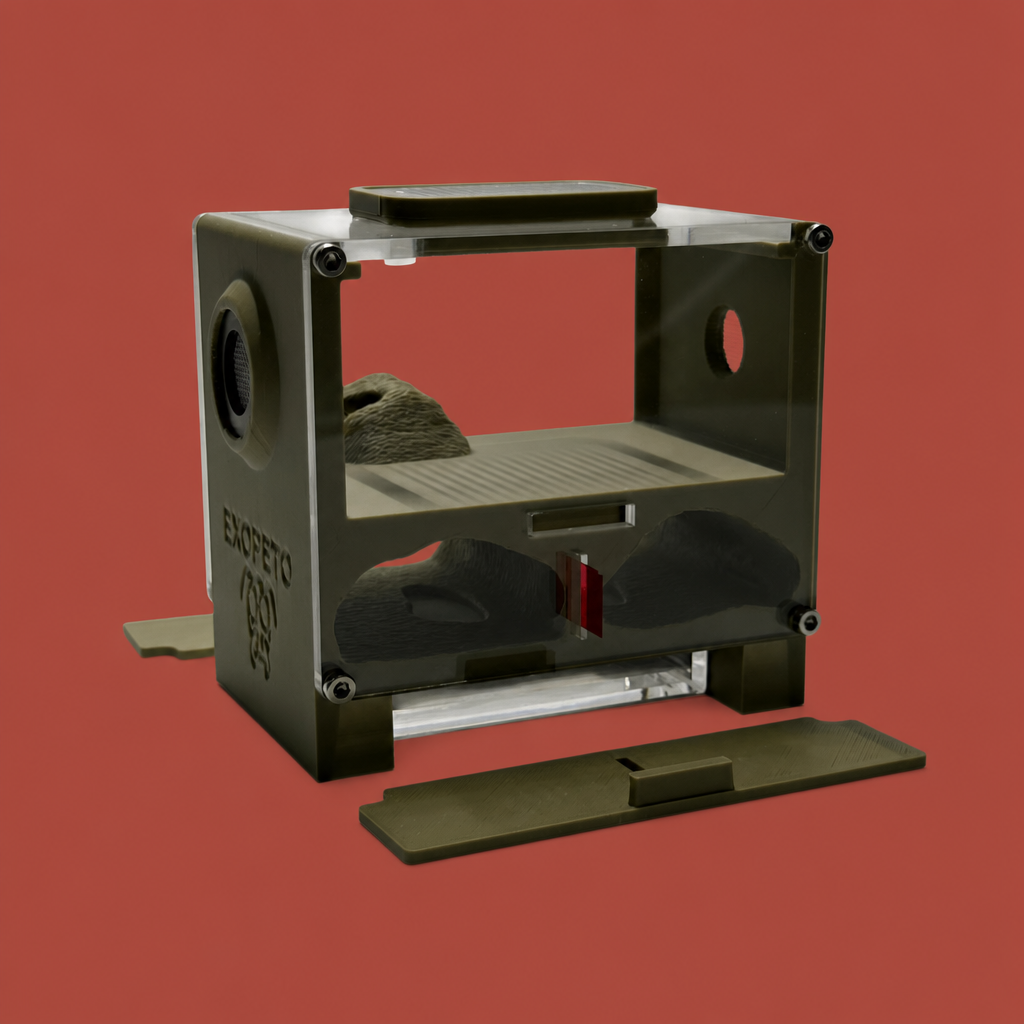
PLA Nest, Transparent Tower, Solid Design
The formicarium is 3D printed in PLA, a rigid and odourless material that is safe for your ants and holds its shape over time. The water tower is transparent, so you can see exactly how much water remains without disturbing the colony. The design connects the tower directly to the nest chambers, letting humidity spread naturally through the tunnels where your ants actually live and raise their brood.

Picture This
Your First Colony Moving In
You have just introduced a small Lasius niger colony, the common black garden ant, into the formicarium. Within hours they are exploring the tunnels, the workers are already organising brood near the warmest chamber, and the water tower is quietly doing its job in the background. You top it up once, settle back, and watch through the transparent panel as your colony makes itself at home.

Daily Reality
Less Fussing, More Watching
In practice, the water tower means you are not reaching for a syringe every other day trying to hit the right humidity spot. You refill the tower when the level drops, and the nest handles the rest. That simplicity matters whether you are a teenager managing your first colony between school days or an experienced keeper who already has several setups running and does not want another high-maintenance nest on the shelf.
FAQ
Your Questions Answered
What ant species work best in this formicarium?
This nest is designed for small to medium ant species. Good starter choices include Lasius niger (the common black garden ant) or Messor barbarus (the seed-harvesting ant). If you are unsure where to begin, our article on ant keeping for beginners walks you through species selection.
How does the water tower humidity system actually work?
The transparent water tower connects to the nest chambers and releases moisture passively through diffusion. You fill the tower, and it gradually humidifies the tunnels without any pumps or wicks to manage. You simply top it up when the visible water level drops.
Is PLA safe for ants?
Yes. PLA is a rigid, odourless 3D printing material that does not off-gas harmful compounds once printed and cooled. It holds its shape well at normal room temperatures, making it a practical and ant-safe choice for a formicarium.
How often do I need to refill the water tower?
Refill frequency depends on your room temperature and ambient humidity, but the transparent tower lets you see the water level at a glance without opening or disturbing the nest. There is no guesswork involved, which is one of the main practical advantages of this design.
Is this suitable for a founding queen or does it need an established colony?
The formicarium is sized for small to medium colonies, so it works well once your queen has her first workers and the group is ready to move into a proper nest. For the founding stage itself, a small test tube setup is usually the better starting point.


