

Lasius niger care: how to raise your first colony
A black garden ant colony starts with one queen, who raises her first workers alone. So the early weeks depend on the conditions you give her, and one mistake can stall the colony.
This guide explains how to set up a founding queen, what to feed the workers, and how to keep the colony steady through temperature, moisture and winter.
Lasius niger care starts with a single founding queen
A newly mated Lasius niger queen raises her first workers alone, from her own reserves, so do not feed her before they emerge. Give her a quiet, dark, stable spot.
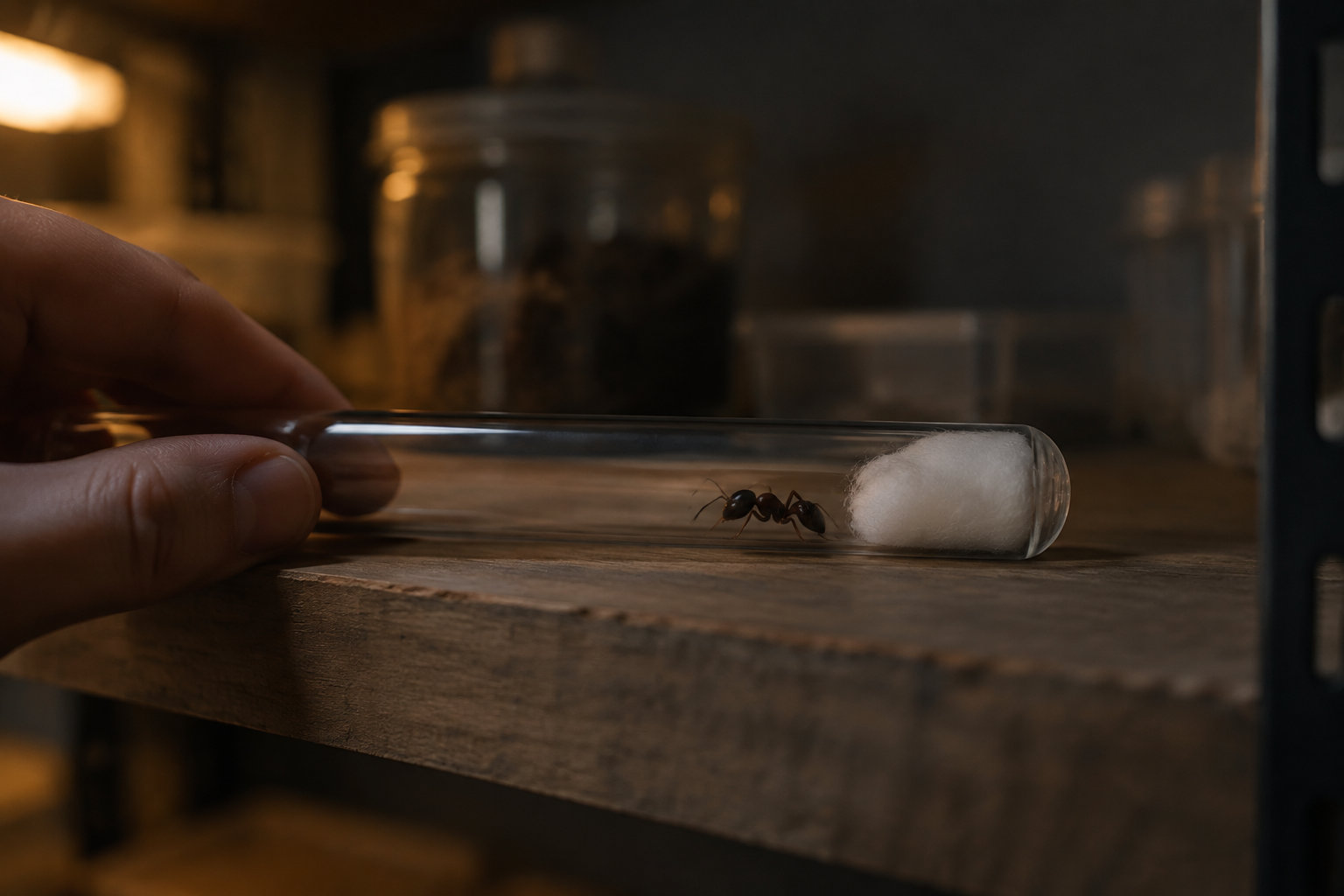
Keep each founding queen alone, since queens sharing one space may fight once workers emerge. The Formicarium Gypsum Ant Nest - Dual-Purpose Founding & Colony Nest suits this: its dark chamber and slow-releasing gypsum keep conditions steady.
Planning a different genus later? Read the Formica ant species care guide before buying a nest.
Test-tube home setup
Fill the tube. Use a tube about 15 cm long and 1.2 cm wide. Fill one-third with water, held back by cotton. Add the queen. Put her on the dry side and close the tube with a second cotton plug. Cover and place it. Wrap the tube in dark paper or foil. Keep it at 20–25°C, out of direct sunlight.
What a young colony eats, and how much to offer
A young colony needs two foods. Sugar gives the workers energy: offer a small drop of sugar water or diluted honey once the first workers are active. Protein feeds the brood: add small insects such as fruit flies.
Wild workers eat honeydew, nectar and insect remains, and they hunt small insects and larvae. Your colony needs both, so feed sugar and protein together. For a yellow meadow ant, check its feeding and housing tips first.
Offer protein in small portions, and watch for these points:
- For a colony with fewer than 50 workers, give two or three pre-frozen fruit flies twice a week.
- As the brood grows, increase the insect portion.
- Remove leftover insects before they grow mouldy.
- Keep fresh water in a water tube with cotton across the opening, so workers can drink without falling in.
- Do not feed insects that may have been exposed to insecticide, because insecticide exposure can increase worker deaths in Lasius niger.
Keeping the nest warm and humid without letting it dry out
Keep the nest at about 21–25°C during the active season. In a lab study, nests at 27°C dried out faster than nests at 23°C, and a dry nest puts the brood and workers at risk.

Direct sunlight warms a small nest fast and dries it out. Keep it out of direct sun, and check the water more often when the nest is warm.
Set up one damp part of the nest and keep the rest drier, then check the water on a set schedule. For the humidity range your colony needs, see the Lasius niger care sheet.
| Criteria | Test-tube reservoir | Formicarium Concrete Ant Nest with Water Tower |
|---|---|---|
| Water check | Every 2 to 3 weeks, refill if needed | 20 mL water tower, humidity stable up to 25 days per fill |
| Dark nesting area | Cover the tube so the queen stays in the dark | Removable shade plate |
| Water kept in | Test tube | 20 mL water tower |
Winter rest at 5 to 10 degrees Celsius for French colonies
In France, a Lasius niger colony needs a cool winter rest. Keep it at 5 to 10°C for three to four months, usually from November to February.
This slows the colony down so it can wake up properly in spring.
If your room stays above 10°C in winter, the colony does not really rest. Move the nest to a cool, stable room before November.
Workers die more often at 2°C than at 7 to 8°C, so keep the nest out of very cold spots. Check the water reservoir during the rest: the ants barely move, so a dry reservoir can go unnoticed. Do not open or shake a dormant nest. In spring, bring it back to room temperature gradually, not in one move.
Moving the colony out of its test tube without losing workers
Nest options as the colony grows
Watch the entrance, not a worker count. When workers jam there, waiting to get in or out, the colony has outgrown its tube.
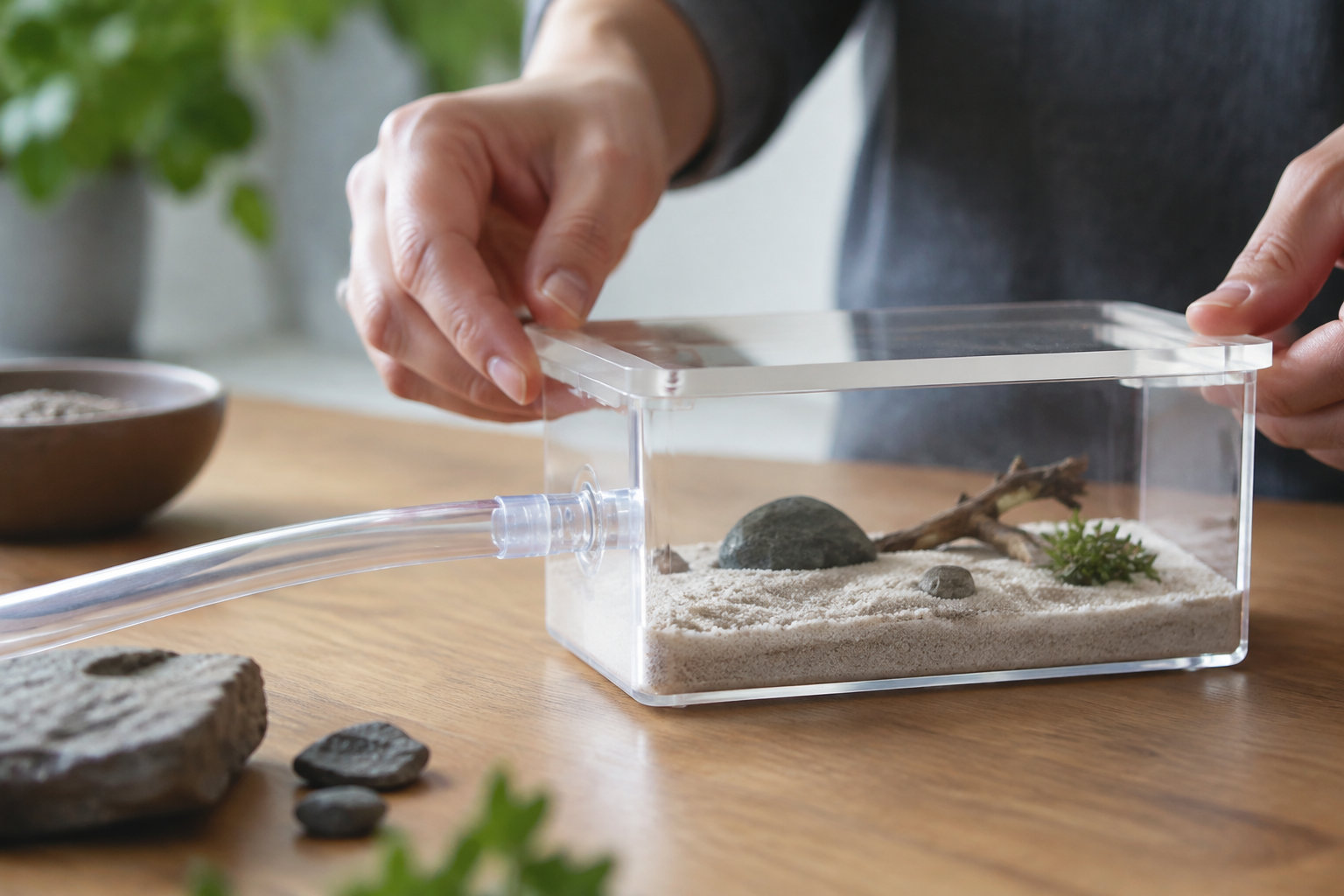
A rough sign is about 30 to 50 workers crowding the tube. A test tube suits a founding queen and a small colony, but a larger one needs a plaster, acrylic or soil-based nest.
Each option fits a different stage:
- Plaster or soil-based nest: room for a larger colony once it outgrows the tube.
- Acrylic Formicarium - Double Chamber Ant Nest: two connected chambers and clear acrylic walls, in a compact size for a founding queen or small colony.
- Foraging area connected to the nest: workers can feed there, so the colony can stay put a while longer.
Escape prevention
Lasius niger workers climb smooth surfaces, so a loose lid or an open foraging area lets them get out and leave the colony short of workers. Close the nest with a secure lid, and set an escape barrier around the foraging area.
Attach the foraging area to the nest, then put food in it. Keep the queen and brood in the nest. The workers walk over, collect food, and carry it back, so you don’t have to move the colony early.

Once workers keep feeding there, the colony knows the space, so a later move causes less disturbance.
Development from egg to first walking worker takes weeks
Lasius niger grows through four stages: egg, larva, pupa and adult. In a laboratory colony, counted from the day the queen was collected, larvae appeared on day 18, pupae on day 25, and the first walking worker on day 42.
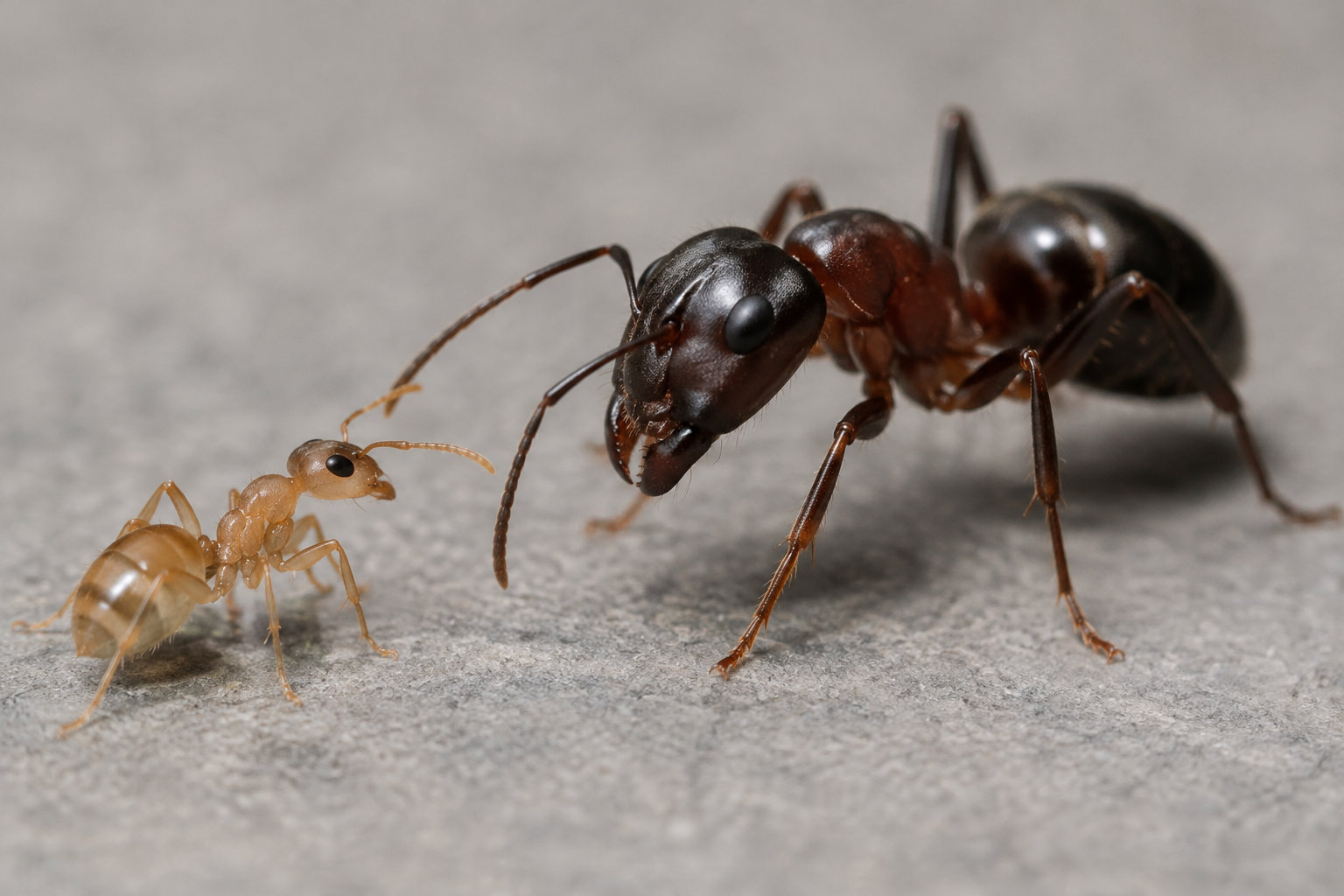
At home, with the queen at 20–25°C, the first workers often appear after four to six weeks. Keep the temperature in that range and plan on several weeks of waiting. Colder or warmer, the timing changes.
Don’t judge progress by a date. Check these signs instead:
- The first workers, called nanitics, are smaller than the workers raised later, so a small first worker is normal.
- Eggs and larvae show the colony is growing, even before the first worker walks out.
- For Lasius niger, nuptial flights (when winged queens and males leave the nest) usually take place from early July to mid-September in France and Europe.
Start with one queen, one dark spot, and no food for her until the first workers hatch. Most early problems come from feeding too soon, too much light, or a dry nest.
Your next step is to set up the queen now and check her water on the same day each week. Then wait, and watch the entrance rather than the calendar.
Frequently asked questions
Can Lasius niger ants bite?
Yes, Lasius niger ants can bite, so do not handle them with bare hands. Move them with a soft brush or a strip of paper, and keep your fingers away from the entrance when you open the nest.
Do Lasius niger colonies need to be fed every day?
No. A Lasius niger colony does not need food every day. Offer sugar water and small insects in small amounts, and adjust the amount to the colony’s size.
Leftover food can grow mould, so a small portion is safer than too much.
How long does a Lasius niger queen live?
A Lasius niger queen can live for more than 20 years in captivity. That means one founding queen can head the same colony for many years, so the care you give her in the first weeks matters a lot.